
Torticollis & Plagiocephaly

Does your baby only turn their head to one side? Or keep their head tilted most of the time? These are common concerns for parents—and the good news is that torticollis and plagiocephaly are more common than you might think and very treatable, especially when pediatric physical therapy starts early.
Early identification and support can make a meaningful difference in your baby’s movement, comfort, and overall development.
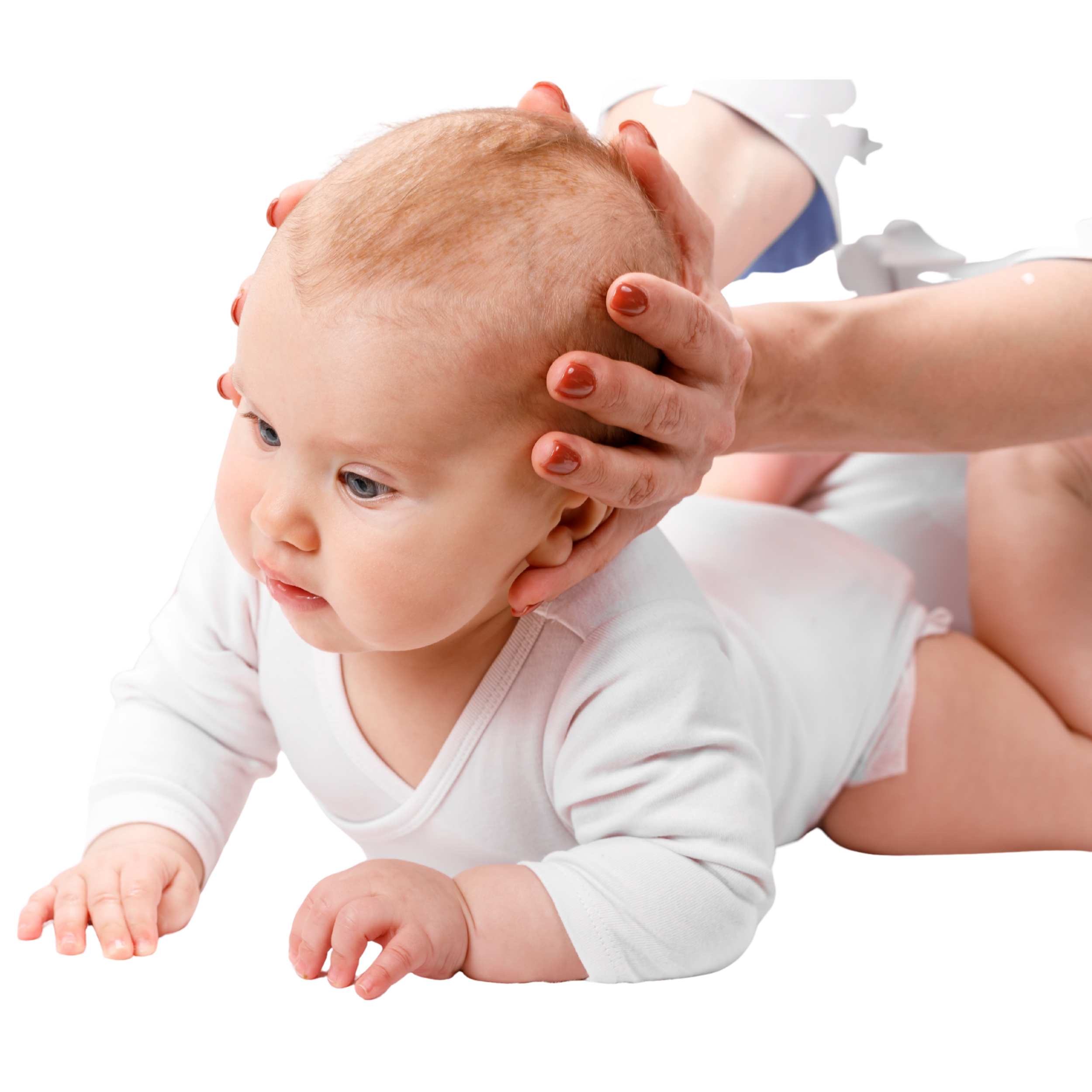
What Is Torticollis?
Torticollis occurs when a baby:
Prefers turning their head to one side
Has a head tilt (often toward the opposite side)
Shows limited neck movement
This often develops due to tight neck muscles and positioning, not because of anything a parent did wrong. Many babies spend time in similar positions early on—during sleep, feeding, or time in carriers—which can contribute to muscle tightness and movement preferences.
Pediatric physical therapy focuses on gently restoring balanced neck movement and strength, helping babies explore both sides of their environment comfortably.

What Is Plagiocephaly?
Plagiocephaly refers to a flattened area on the back or side of a baby’s head. Parents may notice that the head shape looks uneven when viewed from above.
This often develops when:
Babies rest in the same position repeatedly
Head turning is limited
Movement variety is reduced
Because an infant’s skull is soft and rapidly growing, prolonged pressure in one area can affect head shape. Addressing movement early can help reduce pressure and promote more symmetrical development.

How They’re Connected
Torticollis and plagiocephaly are often linked. When a baby prefers one side:
They turn their head the same way repeatedly
Pressure stays on one area of the head
Movement variety decreases
This cycle can reinforce both conditions. Early movement support helps address both, improving neck mobility while encouraging more balanced positioning and play.

How Pediatric PT Helps
Pediatric physical therapy supports babies with torticollis and plagiocephaly through gentle, developmentally appropriate care, including:
Gentle neck stretching and strengthening
Promoting symmetry in movement
Positioning and handling education for caregivers
Tummy time support that actually works
Monitoring head shape and motor skill development
There is no forcing and no pain—just support, guidance, and strategies that fit naturally into daily routines.

What Parents Can Do at Home
Small changes at home can make a big difference. Parents can help by:
Encouraging head turning in both directions
Alternating feeding and carrying sides
Changing sleep and play positions
Avoiding excessive time in “containers” like swings and loungers
Starting tummy time early and often
Asking for help early if unsure
These simple strategies, when paired with professional guidance, can support healthier movement patterns and head shape development. If you need more tips, email us here!
Small changes can make a big difference.
If you ever feel unsure about your baby’s head shape, neck movement, or positioning preferences, early support matters. Pediatric physical therapy can help guide both you and your baby through this important stage of development. And we’re happy to help! Give us a call.