Kids cooking through the winter Part 1 Snowman Marshmallow
Parents know that children understand information more visually than just listening. Parents ALSO understand that children sometimes would like to be picky when it comes to their food selections, if they have a choice. Including children more in the creation of their meals or snacks definitely helps encourage them to diversify their palate, also understand what they’re eating and that a variety of foods can be yummy and good for you at the same time. Granted, not all snacks are good for them necessarily but getting their buy-in by participating in its their creation definitely is a great place to start.
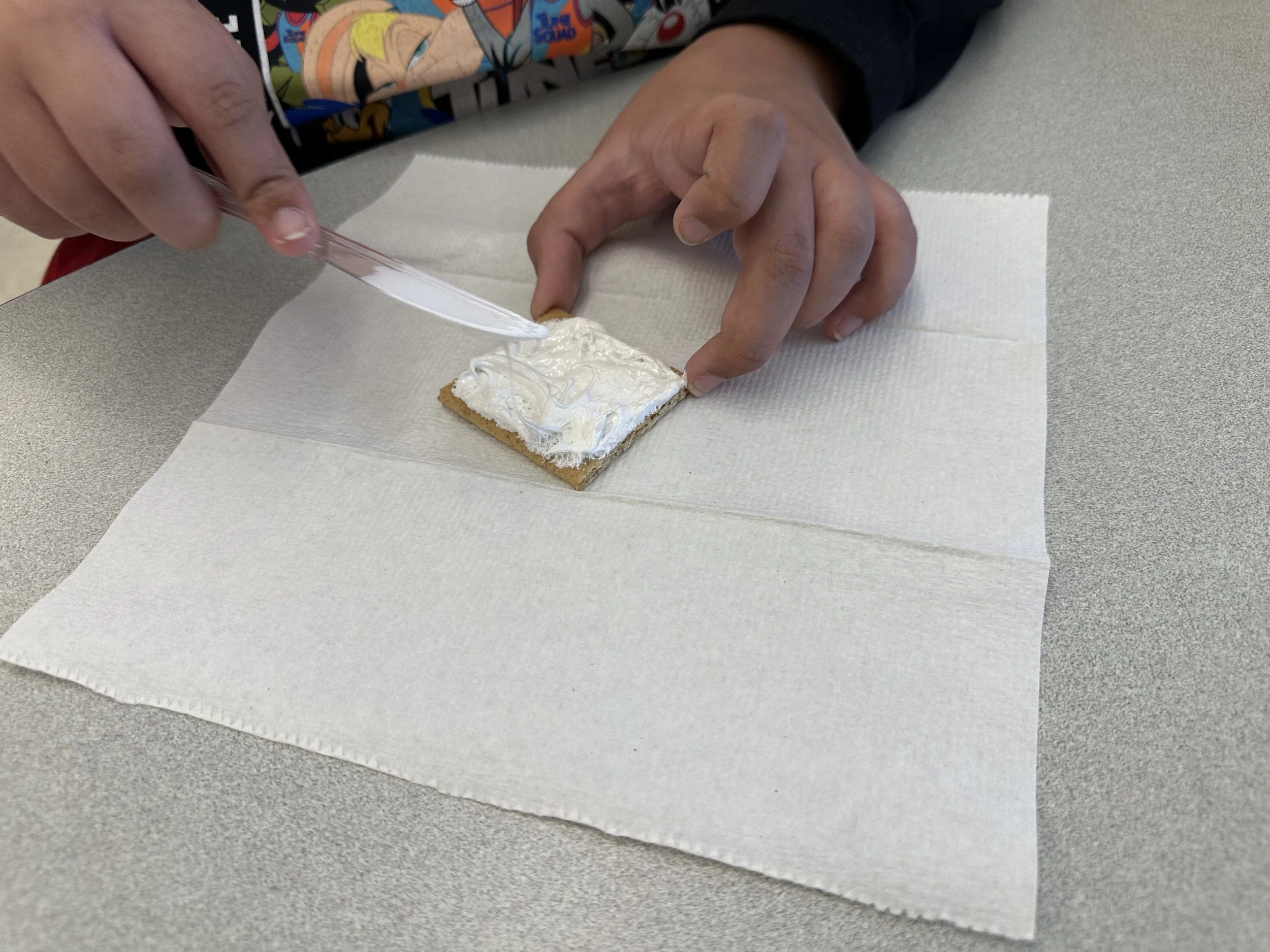
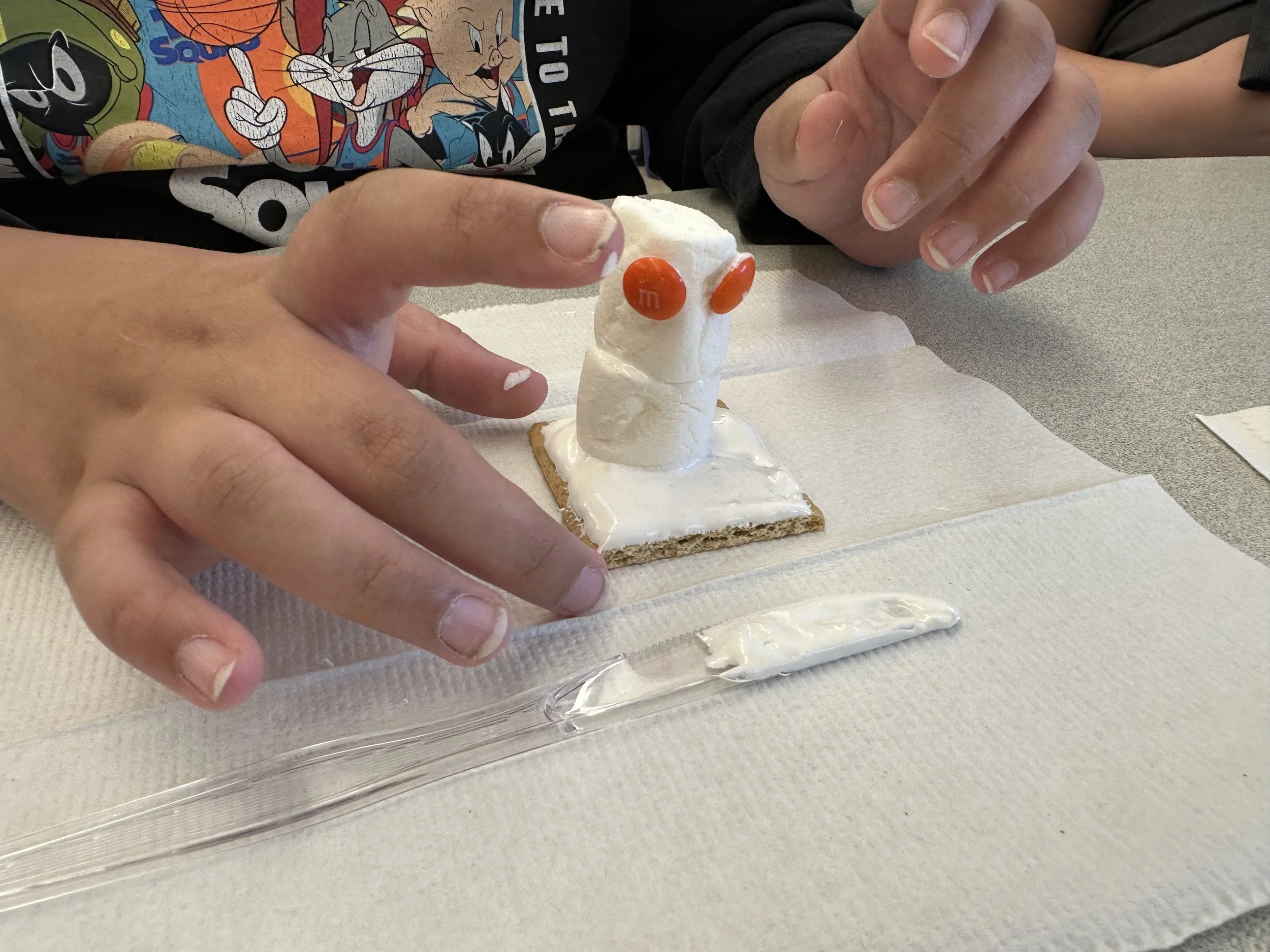
We have a few winter recipes that’ll help increase their buy-in to stick around the kitchen and ‘help’ create their own foods and snacks. Today we are sharing our Snowman Marshmallow recipe. We love activities that bring learning and fun together—and our Snowman Marshmallow AAC Adapted Visual Recipe does exactly that. This simple, hands-on recipe is designed so all children can participate, whether they are readers, non-readers, or AAC users.
It’s easy to make, easy to follow, and packed with opportunities for communication.
Made for Readers and Non-Readers
One of the biggest strengths of this recipe is its use of visual supports. Each step is paired with clear pictures, making it accessible for students who are:
Still learning to read
Non-readers
Visual learners
Students don’t need to rely on text alone to understand what to do next. They can look, anticipate, and participate with more independence and confidence.
AAC-Friendly and Communication Rich
This activity was intentionally created with AAC users in mind. The recipe includes simple directions that are easy to model on an AAC device, allowing communication to happen naturally during the activity—not before or after.
Throughout the recipe, there are many opportunities to model and use core language, such as:
put
on
in
more
help
go
finished
Because core words are flexible and meaningful, students can use them repeatedly across steps, supporting both expressive and receptive language development.
Simple Directions, Big Participation
The directions are broken down into small, manageable steps, making the recipe approachable for learners with different attention spans and skill levels. For some students, success might mean choosing materials or placing one marshmallow. For others, it may mean following the full sequence independently.
This flexibility allows therapists, teachers, and caregivers to easily adapt the activity to meet individual goals.
Easy to Make, Easy to Adapt
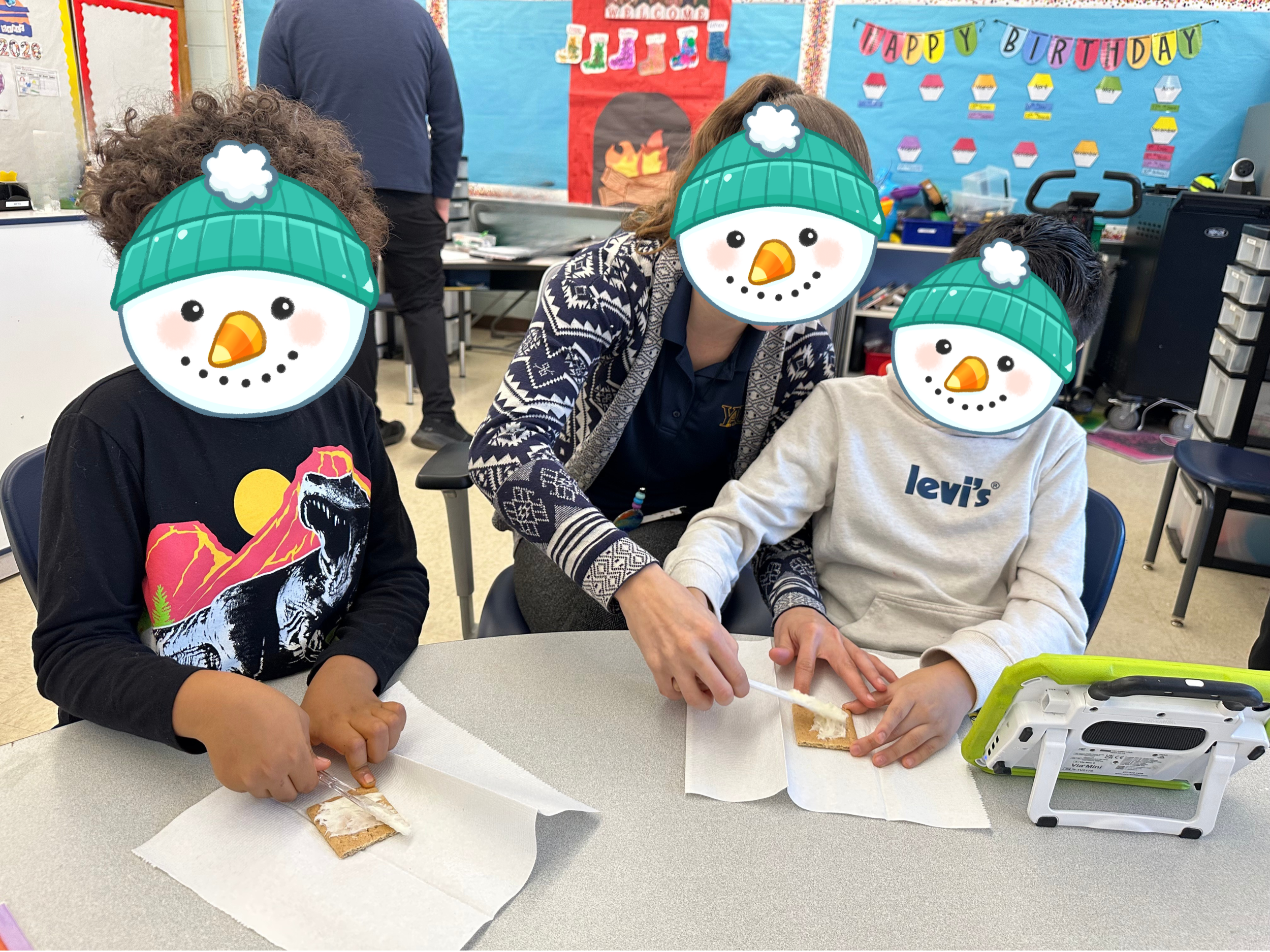
Another reason we love this recipe? It’s easy to prepare. With just a few basic ingredients and minimal setup, it can be used in:
Therapy sessions
Classrooms
Small groups
Home practice
Because it’s low-prep and high-interest, the focus stays on communication, participation, and connection—not complicated instructions.
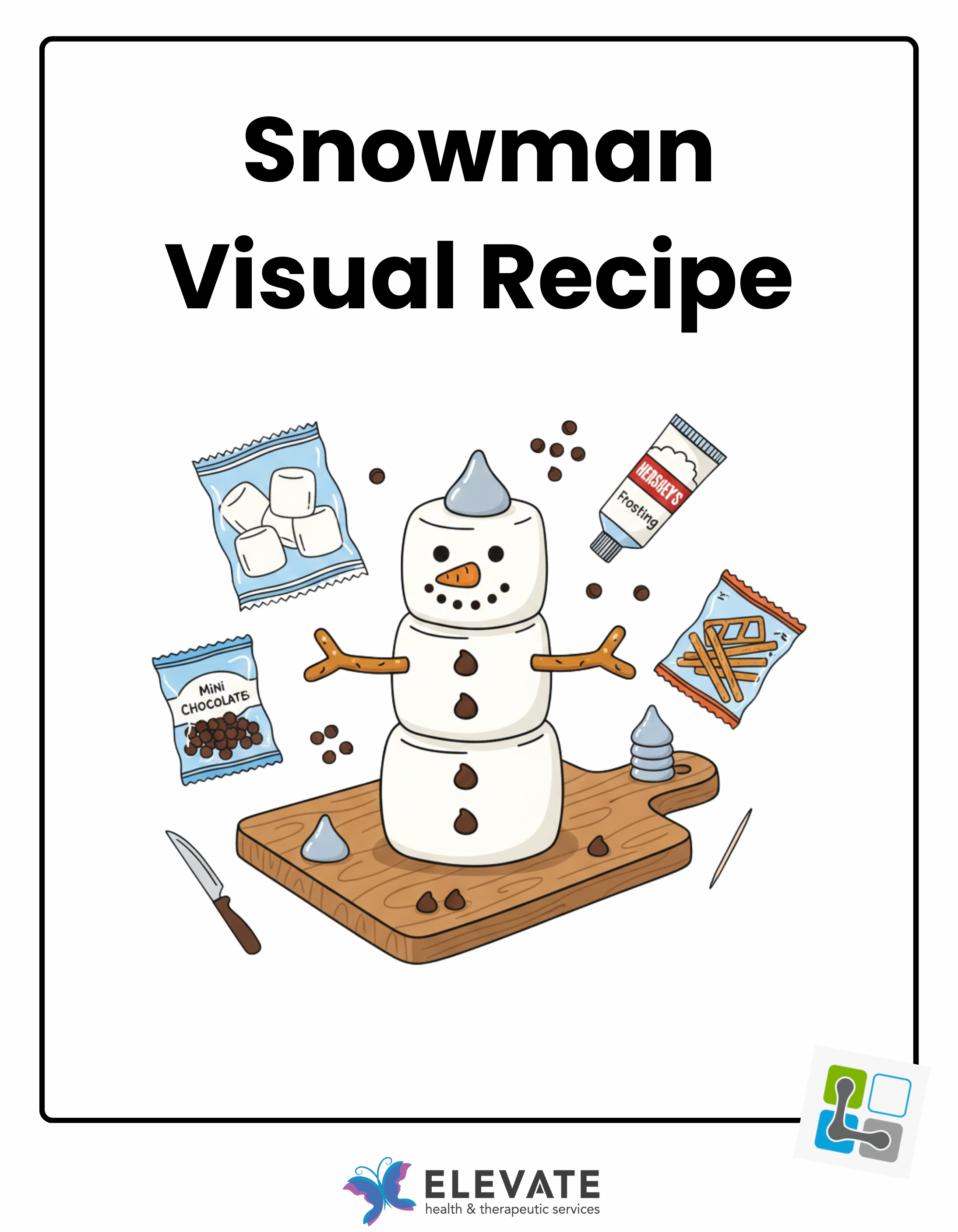
Learning Through Fun (and Snacks!)
Cooking activities naturally motivate learners, and this snowman marshmallow recipe makes learning feel playful and engaging. Students are more willing to try new skills when they’re having fun—and building a snowman treat adds an extra layer of excitement.
Most importantly, this activity creates a shared experience where everyone can communicate, participate, and feel successful, regardless of how they express themselves.
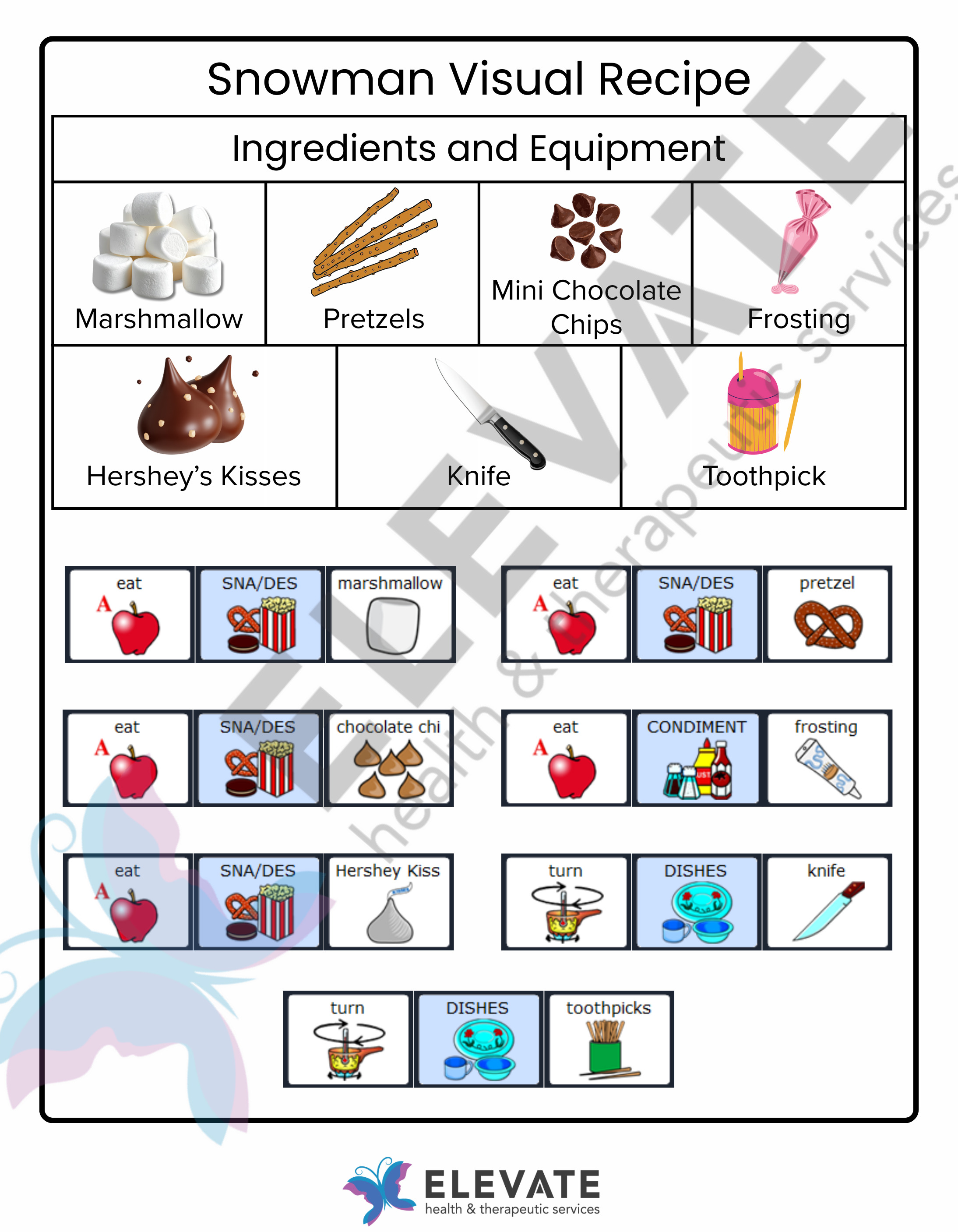
A Simple Recipe with Meaningful Impact
The Adaptive Snowman Marshmallow Recipe is a great example of how thoughtful design—visuals, core language, and simple steps—can make an activity accessible to all learners. It’s not just about making a treat; it’s about building communication, confidence, and joy along the way.
If you’d like to see more adaptive, AAC-friendly activities like this, we’re always excited to share what we’re creating at Elevate Health.