
Outdoor Activities to Boost Speech and Language Development
Discover fun outdoor activities that help boost your child’s speech and language development. Easy, effective strategies for toddlers and preschoolers.
When the weather warms up, therapy doesn’t have to stay inside. In fact, outdoor play is one of the most powerful (and natural) ways to support speech and language development.
If you’re looking for ways to help your child communicate more—without flashcards or drills—this is where to start.
Why Outdoor Play Supports Language Development
Outdoor environments naturally:
Increase motivation and engagement
Provide real-life vocabulary opportunities
Encourage movement + communication together
Reduce pressure (kids communicate more when it feels like play)
You’re not “just playing”—you’re building functional communication skills.
7 Outdoor Activities That Boost Speech and Language
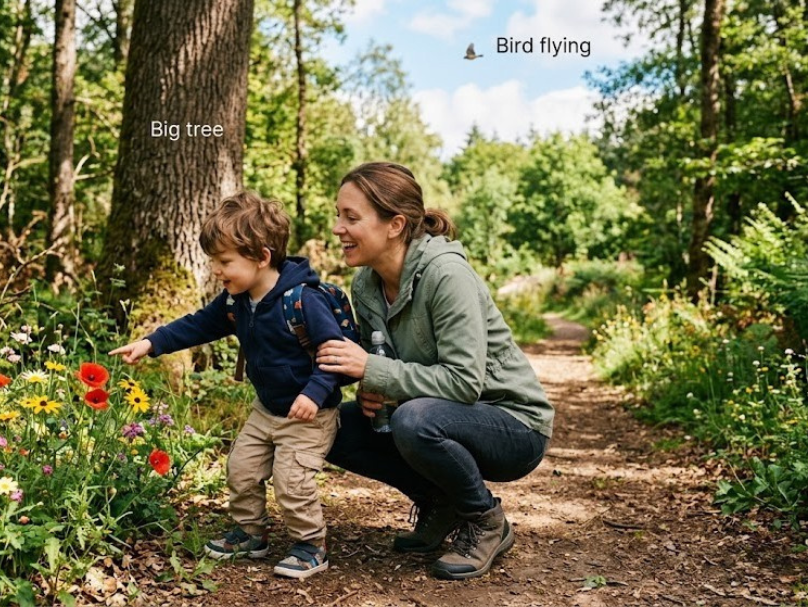
1. Nature Walks = Vocabulary Goldmine
Talk about what you see:
“Big tree”
“Red flower”
“Bird flying!”
Target skills:
Vocabulary development
Describing words
Joint attention
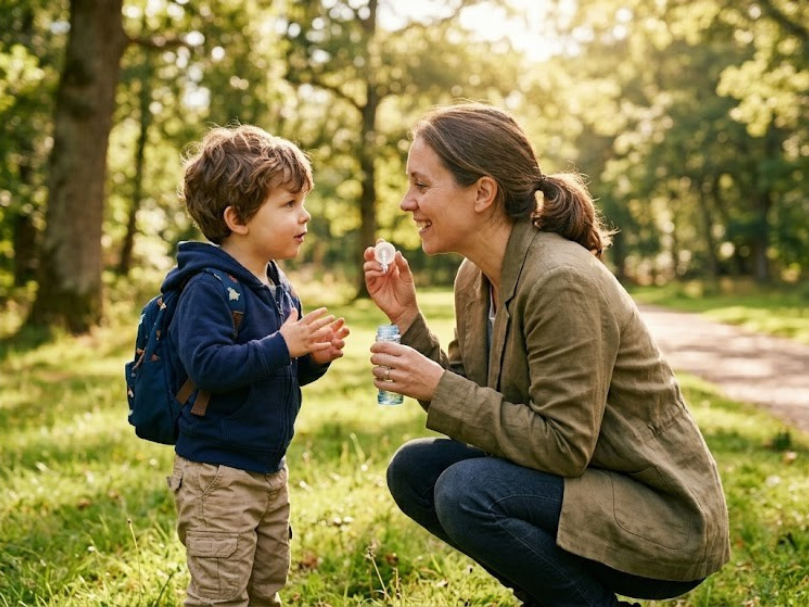
2. Bubbles for Communication Temptation
Blow bubbles… then pause.
Wait expectantly for your child to:
Look at you
Gesture
Attempt a word (“more,” “bubbles”)
Target skills:
Requesting
Turn-taking
Eye contact
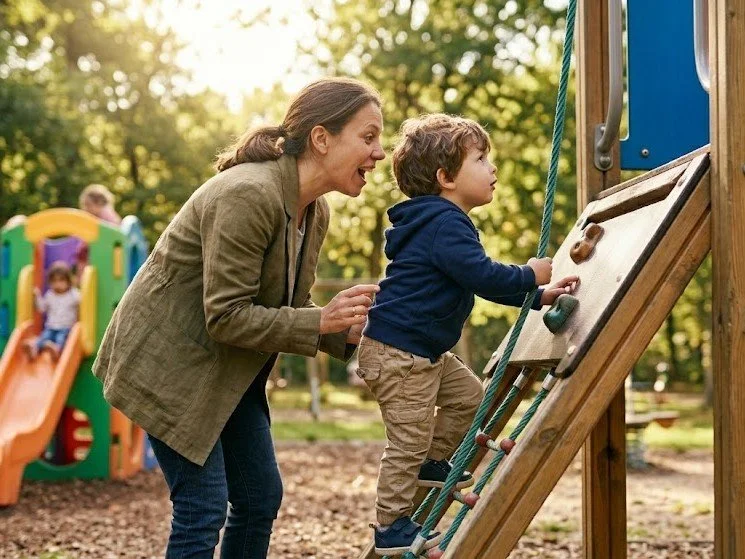
3. Playground Narration
Instead of just watching, narrate:
“You’re climbing!”
“Go down the slide!”
“Up, up, up!”
Target skills:
Action words (verbs)
Sentence building
Following directions
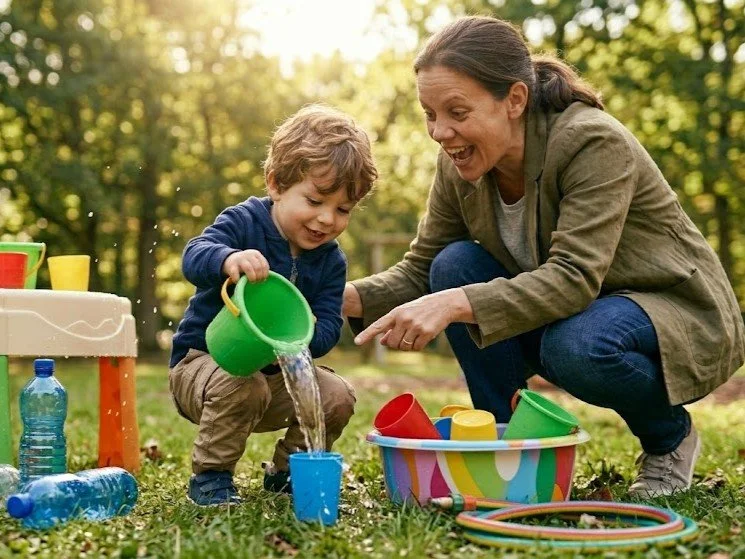
4. Water Play = Language Explosion
Use cups, buckets, and hoses.
Model:
“Pour”
“Full/empty”
“Splash!”
Target skills:
Early concepts
Cause-and-effect language
Functional vocabulary
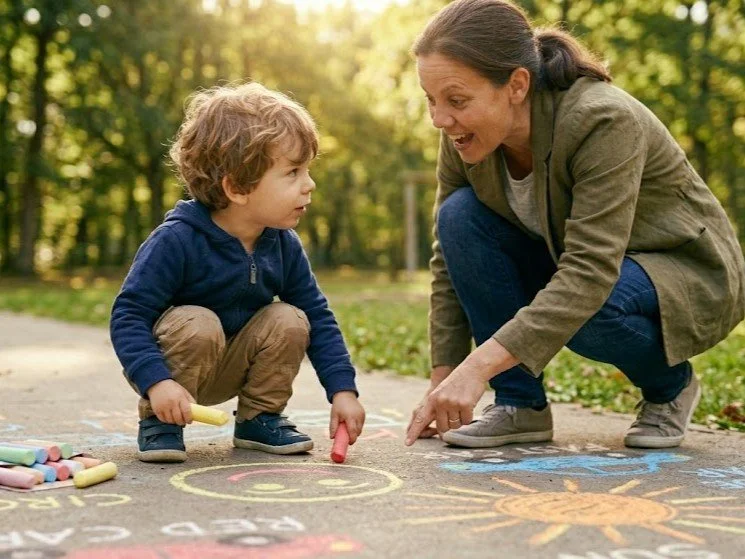
5. Chalk Drawing + Language Expansion
Draw together and talk about it:
“Circle”
“Big sun”
“Blue car”
Expand what your child says:
Child: “Car”
You: “Fast blue car!”
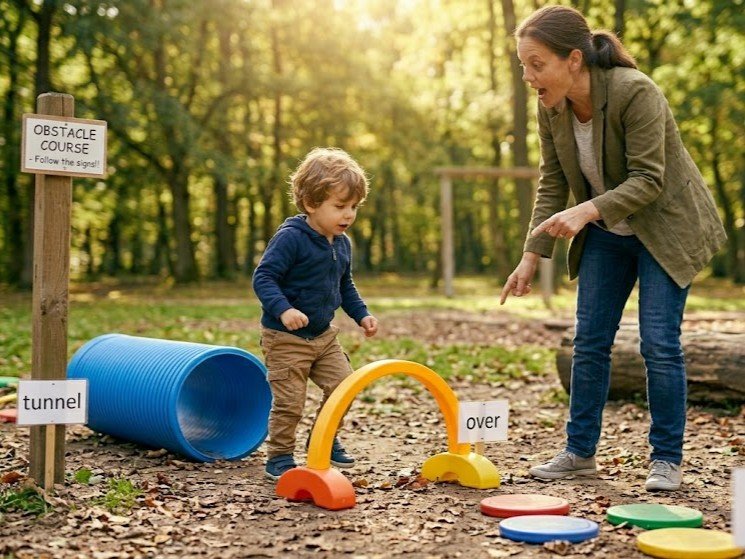
6. Obstacle Courses for Following Directions
Set up simple instructions:
“Jump, then run!”
“Go under, then over!”
Target skills:
Receptive language
Sequencing
Listening skills
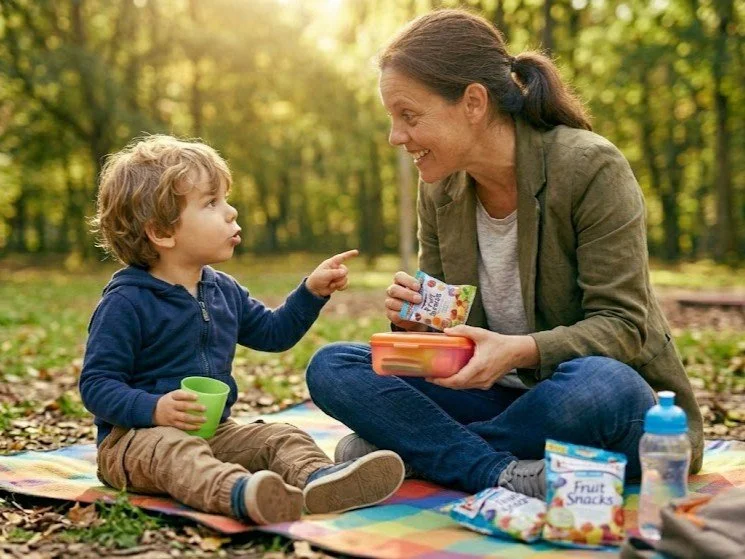
7. Snack Time Outdoors = Built-in Requests
Hold back items briefly to encourage communication:
“Open?”
“More?”
“Help?”
Pro Tips for Parents
Model, don’t demand: Say it, don’t force repetition
Pause and wait: Give your child time to communicate
Follow their lead: Talk about what THEY care about
Keep it simple: Short, clear language works best
The Bottom Line
You don’t need a therapy room to build language.
The best speech therapy moments often happen on the sidewalk, at the park, or in your backyard.
Consistent, intentional interaction during everyday play is what truly drives progress.
