
5 of My Favorite Toe-Walking Exercises
A Pediatric Physical Therapist’s Go-To Activities You Can Do at Home
Toe walking is one of the most common concerns I see as a pediatric physical therapist. While some children toe walk temporarily as they explore movement, persistent toe walking can be linked to tight calves, decreased ankle strength, balance challenges, or sensory-seeking behaviors.
The good news? You don’t need fancy equipment or hours of drills to help. The most effective exercises are often playful, functional, and easy to recreate at home.
Here are 5 of my favorite toe-walking exercises, why they work, and how you can modify each one using everyday household items.
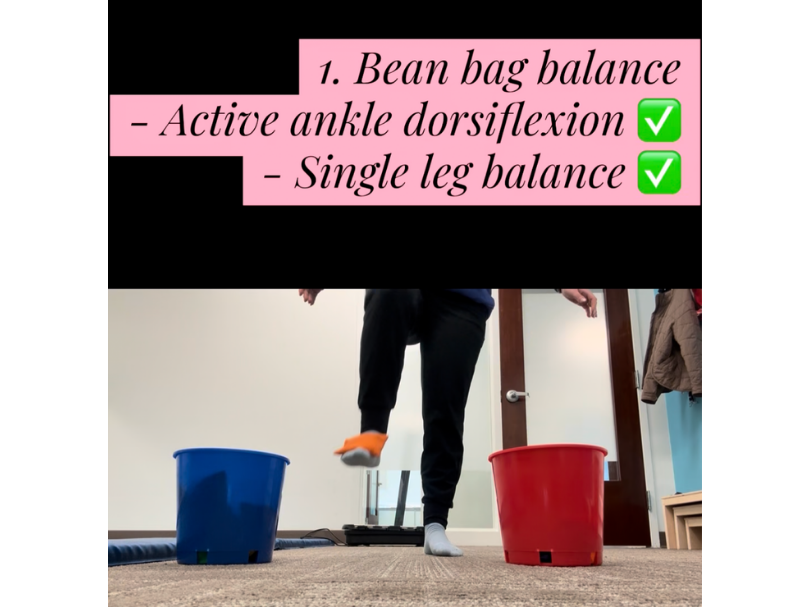
1. Bean Bag Balance (Single-Leg Balance)
What it works on:
Active ankle dorsiflexion (pulling toes up)
Single-leg balance
Foot and ankle strength
In this activity, your child stands on one foot while balancing a bean bag (or small toy) on the top of the raised foot. To keep the object from falling, they naturally have to pull their toes upward—exactly the movement we want to encourage for heel contact during walking.
At-home modifications:
Use Beanie Babies, small stuffed toys, socks, or lightweight toys
Hold onto a wall or chair for support if needed
Turn it into a game: “How long can you keep the toy on your foot?”
💡 Tip: Switch feet and keep sessions short—quality over quantity!
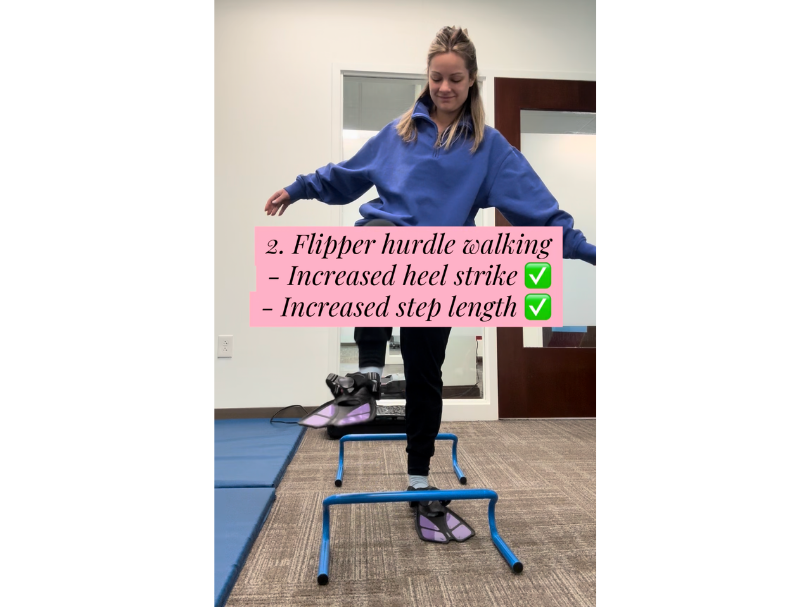
2. Flipper Hurdle Walking (or “Penguin Walking”)
What it works on:
Increased heel strike
Longer step length
Improved gait pattern
Stepping over hurdles encourages kids to slow down, lift their legs higher, and land with more control—often resulting in better heel contact. Flippers exaggerate this even more by making toe walking harder.
At-home modifications:
Step over pillows, shoes, pool noodles, rolled towels, or books
No flippers? Try penguin walking: heels down, toes up, waddling forward
Make a “mission” path across the room
🐧 Kids love pretending—and they won’t even realize they’re working on their gait.
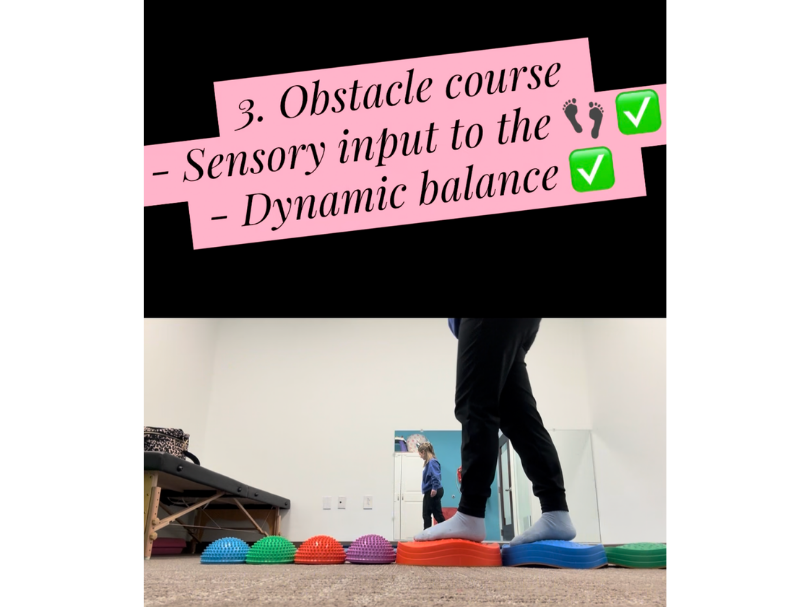
3. Obstacle Course Walking
What it works on:
Sensory input through the feet
Dynamic balance
Body awareness and control
Obstacle courses challenge kids to process different textures and surfaces while moving slowly and intentionally. This added sensory input can be especially helpful for children who toe walk due to sensory-seeking behaviors.
At-home modifications:
Walk over pillows, couch cushions, folded blankets, yoga mats, or carpet squares
Add stepping stones made from books or towels
Encourage “quiet feet” or “heel-first steps” as they move through
🎯 Keep it fun and change it up often to maintain interest.
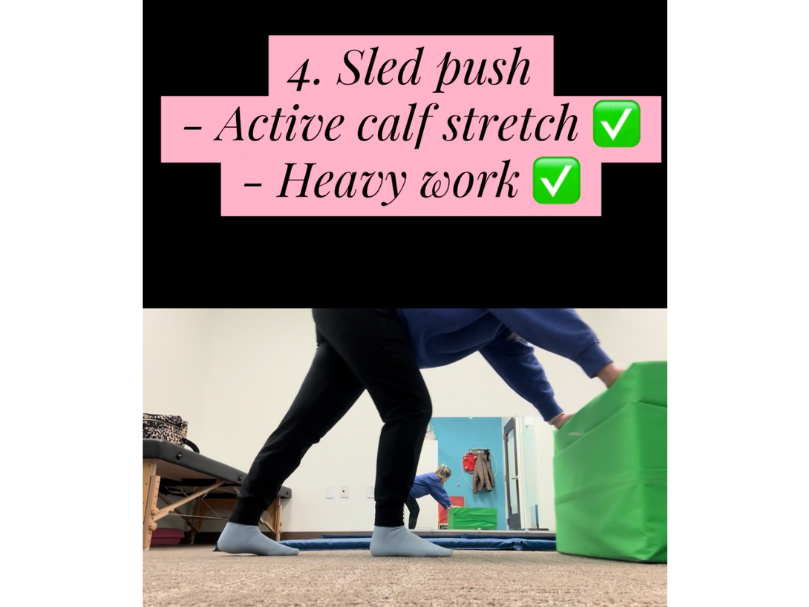
4. Sled Push (Heavy Work)
What it works on:
Active calf stretch
Lower-body strength
Proprioceptive (heavy work) input
Heavy work activities naturally encourage the heels to stay down while also providing calming sensory input. Pushing resistance forward is a powerful way to stretch the calves functionally—without forcing a stretch.
At-home modifications:
Push a laundry basket filled with books, toys, or canned goods
Push a loaded box across carpet
Pretend they’re “helping with chores” or “moving a delivery”
🧺 Bonus: kids love being helpers—and parents love the multitasking.
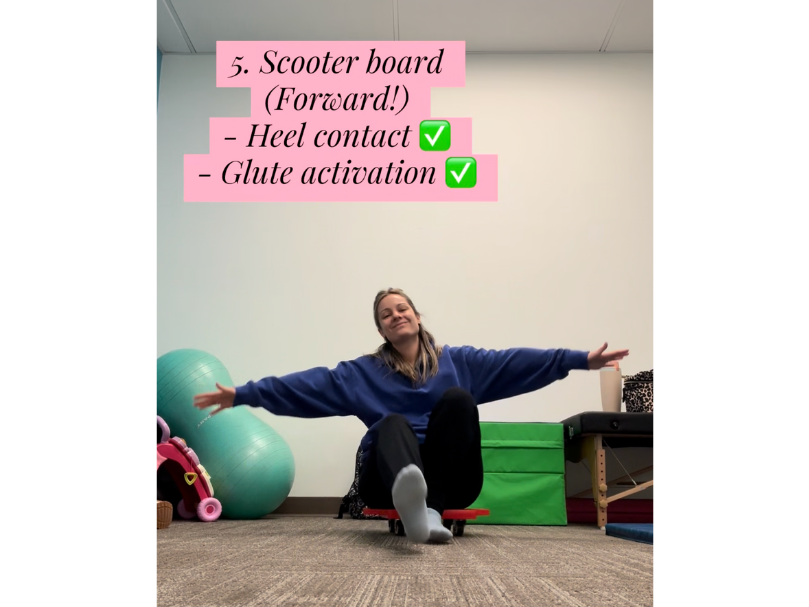
5. Scooter Board (Forward Movement)
What it works on:
Heel contact
Glute activation
Core strength
Scooter board activities encourage kids to use their heels to pull themselves forward, reinforcing the heel-to-toe pattern needed for walking.
At-home modifications:
Sit on a pillow or folded blanket and slide across hardwood or tile
Use socks on a smooth floor
Pull forward using heels only (“no toes allowed!”)
🚀 Turn it into a race or have them retrieve objects from across the room.
Final Thoughts
The best toe-walking exercises don’t feel like exercises at all. When activities are playful, functional, and easy to do at home, kids are more likely to participate—and progress tends to follow.
If you’re concerned about persistent toe walking, a pediatric physical therapist can help determine why it’s happening and create a plan tailored to your child’s needs.
And remember: consistency matters more than perfection. A few minutes of intentional movement each day can make a big difference.
