
Modeling Core Language During Playdough Play
Last week, we talked about how powerful bubble play can be for AAC modeling. (If you missed it, go back and read that post here— we promise it’s worth it.) The same principles apply here: predictable routine, high motivation, repetition of core vocabulary, and intentional pauses.
This week, we’re bringing that same framework to another classic therapy staple: playdough.
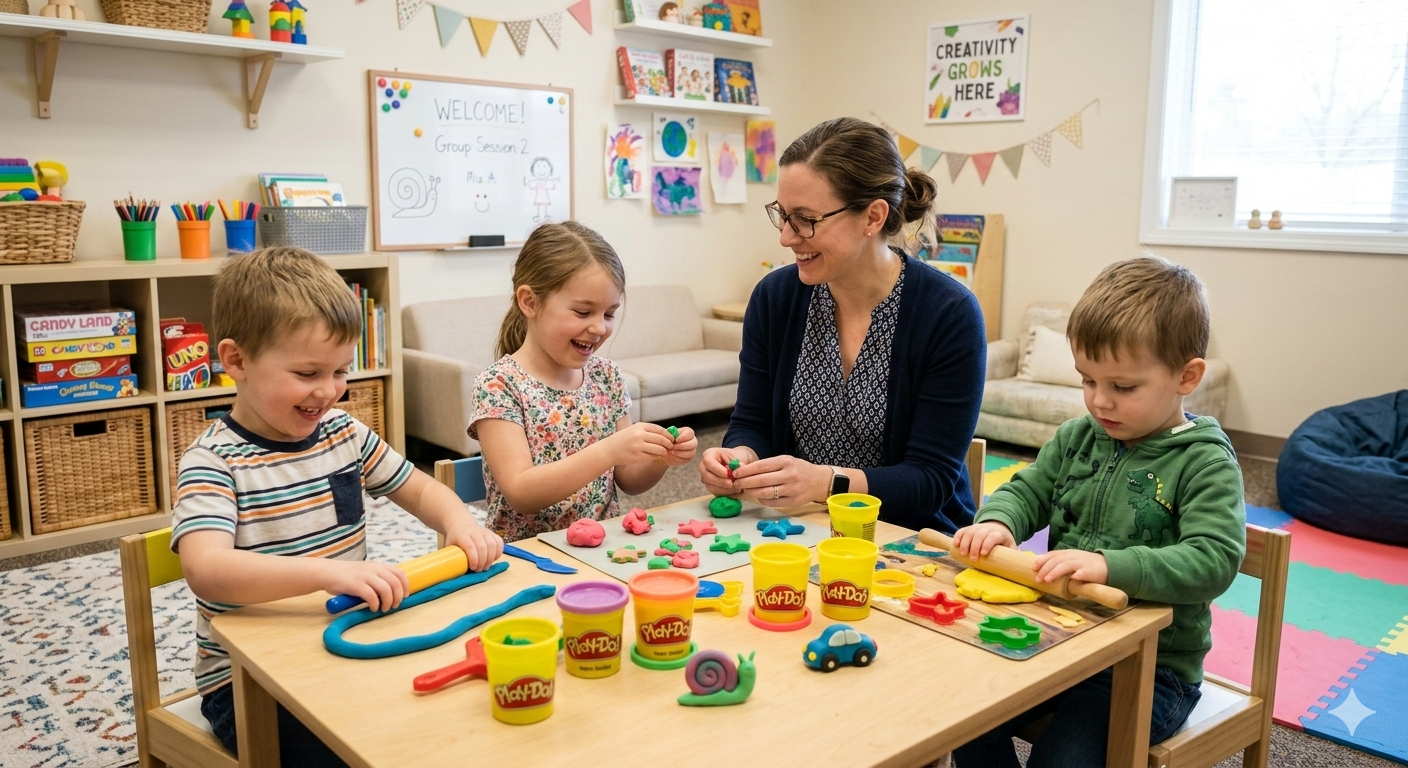
Playdough is hands-on, sensory-rich, and full of natural opportunities to model verbs, pronouns, requests, and turn-taking language.
Let’s break it down.

Why Playdough Is Perfect for AAC Modeling
Playdough naturally supports:
Action words (cut, push, open, close, play)
Pronouns (I, you, me)
Requests (want some, help me)
Turn-taking (you cut, I cut)
Two- to three-word combinations
Unlike bubbles, which follow a tight routine, playdough is flexible and creative. That flexibility allows us to expand beyond requesting and build more complex language.
Start with the Routine: “Open”
Before the play even begins, there is communication opportunity.
Hold the container.
Pause.
Model:
open
help me open
If the lid is tricky, that’s even better. We want authentic (aka - real!) reasons to communicate.
Avoid prompting with “What do you say?” Instead, model and wait.
Foster and Empower: “I Play”
Once the playdough is out, model ownership and action:
I play
I cut
I push
As you narrate your actions on the AAC system, you are showing how language connects to movement.
If the child accesses /play/, you can expand:
Child: play
Adult models: I play
This keeps the language just one step higher than their current output.
Expand to Turn-Taking: “You Cut”
Playdough tools are perfect for structured turn-taking.
Model:
you cut
I cut
your turn
my turn
Hold the tool and pause before handing it over. Label the shift in control.
Turn-taking language generalizes to games, classroom routines, and peer interaction later on.
Encourage Requests: “Want Some”
Keep one color slightly out of reach.
Model:
want some
I want some
want more
You can also introduce requesting for specific actions:
want cut
want push
Again, avoid making it a test. Model consistently and let communication emerge.
Problem-Solving Language: “Help Me”
Playdough cracks. Tools get stuck. Lids are tight.
Perfect.
Model:
help me
help
I need help
Self-advocacy language is functional language. Playdough gives you safe practice reps.
Teach Opposites Through Action: Open / Close
Containers, molds, and tools naturally lend themselves to opposites.
Model:
open
close
push down
When using a rolling pin or cutter, exaggerate the motion and pair it with the AAC model.
Repetition builds comprehension.
Push Down: Action Words Matter
Verbs are the backbone of functional communication.
Model:
push
push down
cut
do
Instead of focusing on nouns like “star” or “snake,” emphasize flexible action words that can transfer across settings.
“Push” works for:
doors
swings
buttons
chairs
That’s the power of core vocabulary.

The BIG Takeaway (Just Like Bubbles)
If you read last week’s bubbles post, you’ll recognize the pattern:
Model without demand
Keep your spoken language simple
Touch the device as you speak
Pause and wait
Repeat core words often
Celebrate all attempts
Whether it’s bubbles floating up or playdough being pushed down, the goal isn’t to teach the word “playdough.”
Whatever it is, the way you tell your story online can make all the difference.
The goal is to build a flexible system of high-frequency core words that children can use anywhere.
Open
Help
Cut
Push
Want
Play
Playdough is just the vehicle. Language is the destination.
Next time you pull out the sensory bin, remember: every squish is a chance to model.
Ready to turn play into progress? Click here to download your free 'AAC and Me: Playdough! – Core Language Series' pack and get the exact visual supports you need to start modeling today.
