
5 Fun Ways to Practice Single-Leg Balance at Home
from a pediatric physical therapist
Single-leg balance is one of the most important foundational skills for kids — and one of the easiest to practice through play. It shows up in everyday activities like climbing stairs, kicking a ball, stepping over obstacles, and running with coordination.
If you’re looking for simple, playful ways to build balance at home, here are five pediatric PT-approved activities using toys you probably already have.
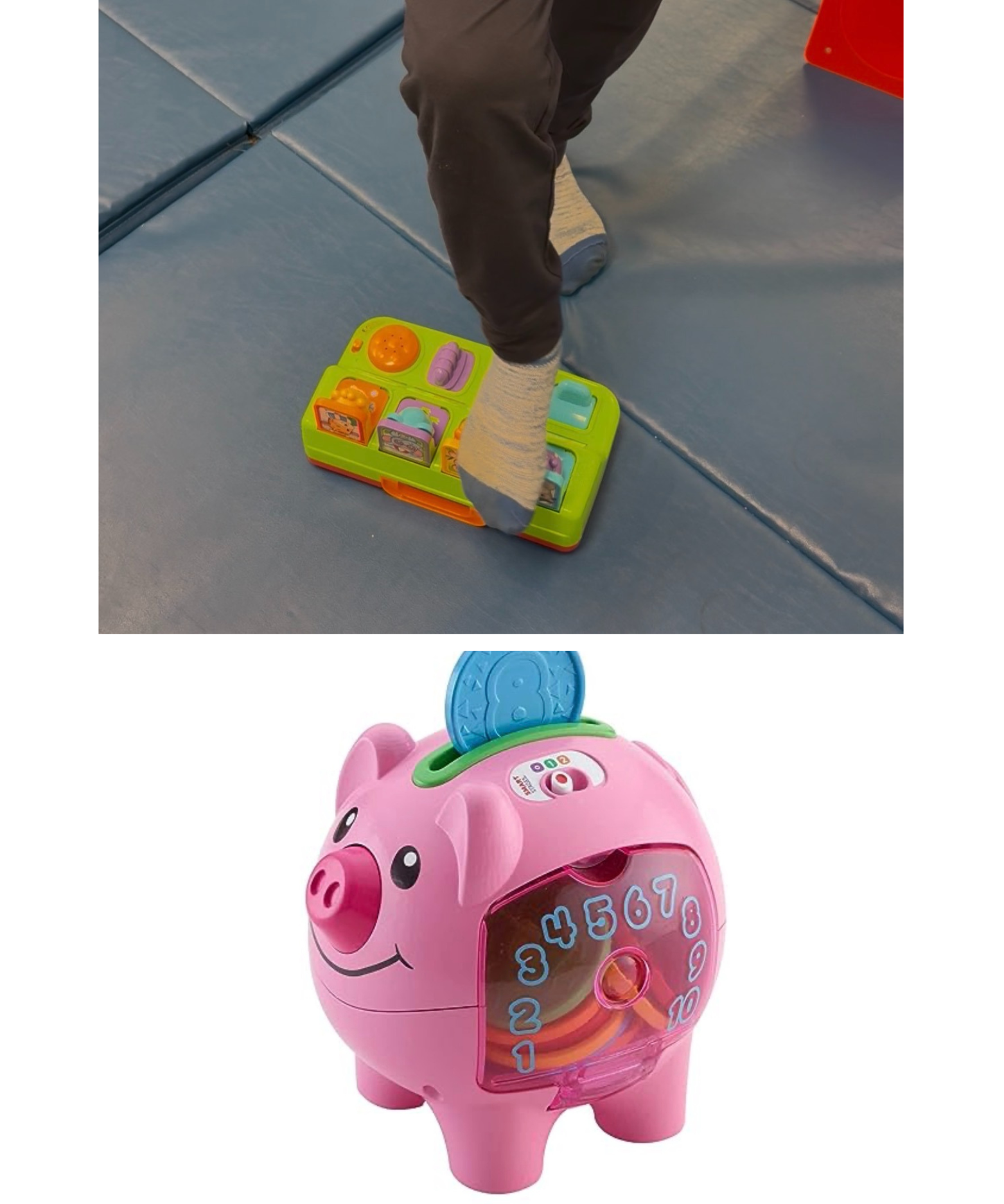
1. Stomp & Pop Play
Use: Pop-up toys, piggy banks, stomp rockets, or even bubble wrap
Anything that encourages stomping is great for single-leg balance. One of my favorite options is a piggy bank where kids stomp coins into the slot, but pop-up toys and stomp rockets work great too. Even stomping bubble wrap can be a fun variation!
Why it works:
Stomping builds power, coordination, and stability through the entire lower body while challenging kids to control weight shifting onto one leg.
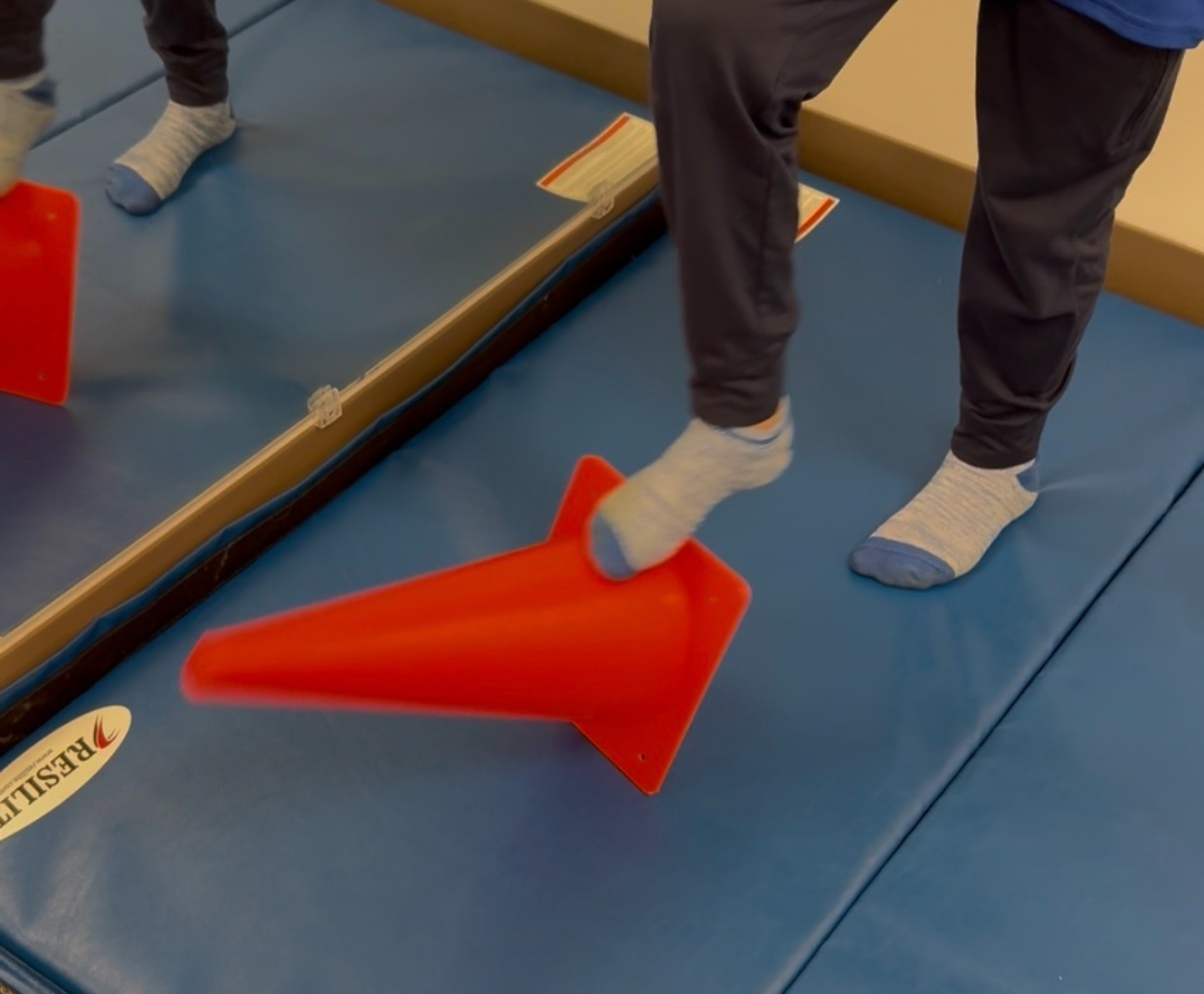
2. Cone Kick Challenge
Use: A small cone or stackable toy
Have your child gently kick a cone over, then try to stand it back up using the same foot while balancing on the other leg.
Make it harder:
Challenge them to complete multiple cones in a row without putting their other foot down.
Why it works:
This improves single-leg control and motor planning — skills needed for sports, playground play, and coordinated movement.
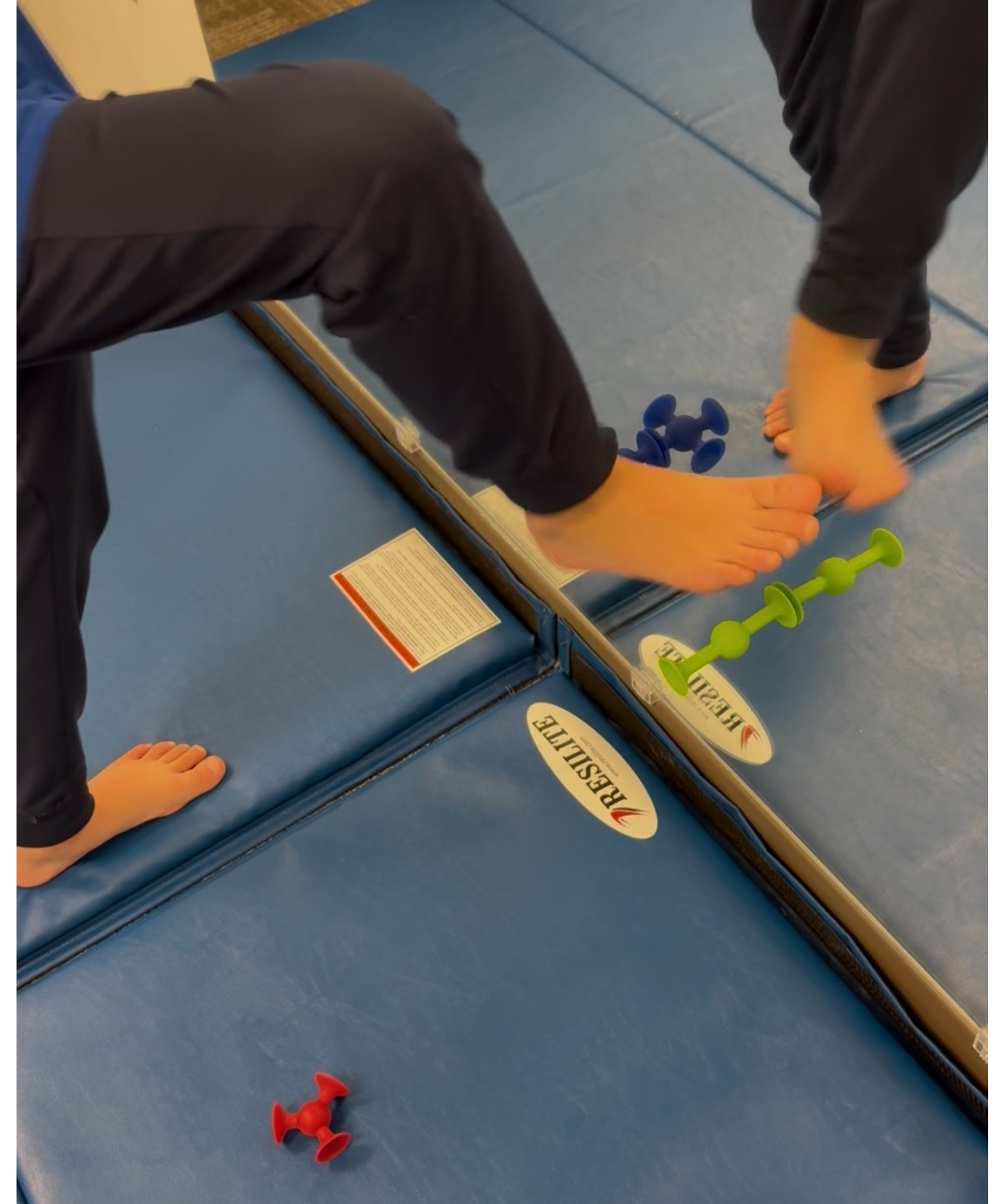
3. Squigz Pull-Offs
Use: Squigz or suction toys + a mirror or window
Stick Squigz onto a vertical surface and have your child pull them off using their foot while balancing on one leg.
Pro tip:
They stick best to mirrors or windows!
Make it fun:
See how many they can pull off without losing their balance.
Why it works:
This challenges core strength, hip stability, and dynamic balance in a super engaging way.
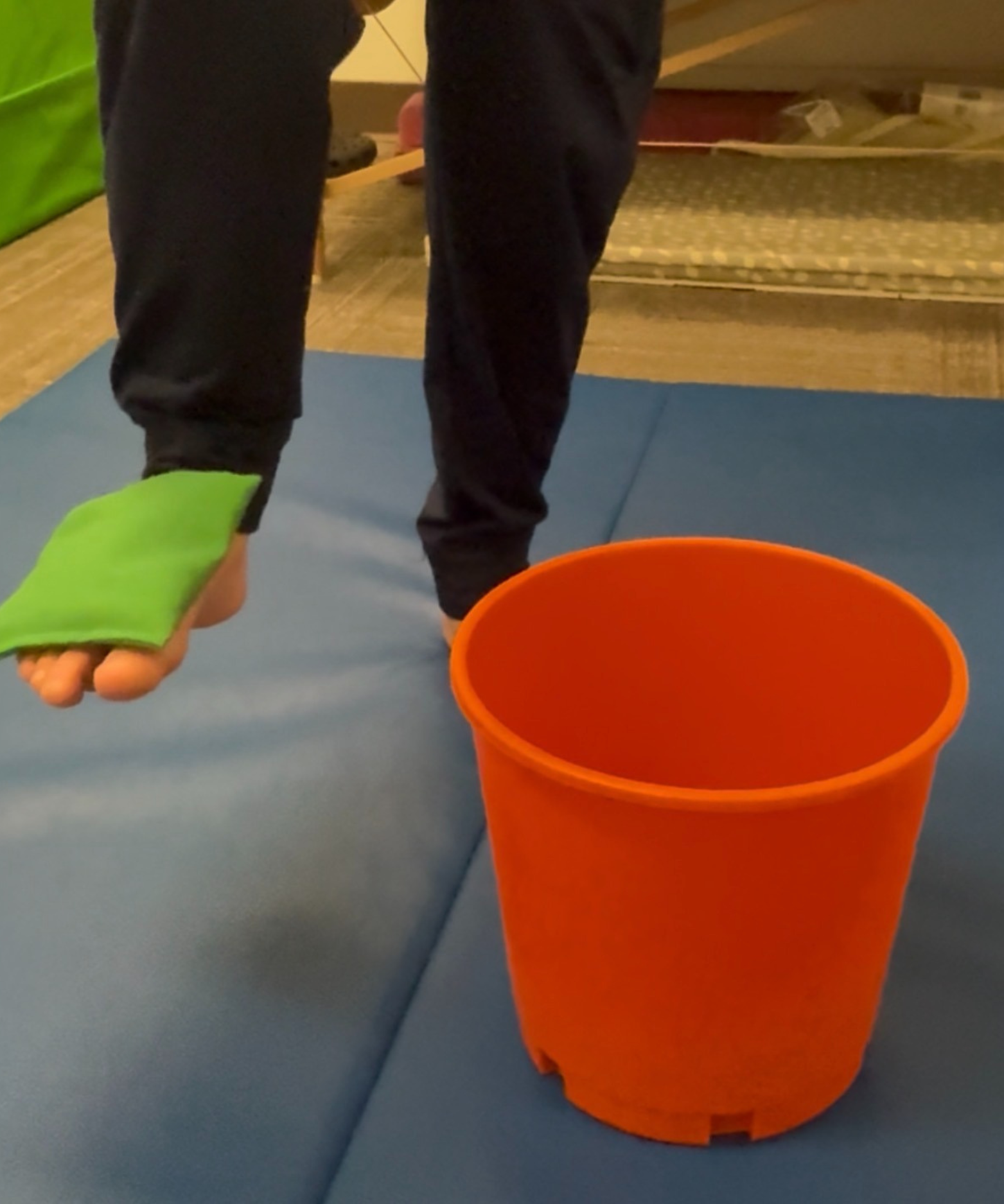
4. Bean Bag Balance
Use: Bean bags or Beanie Babies
Have your child balance a bean bag (or a small stuffed animal that sits well) on top of their foot, then lift and drop it into a bin.
Why it works:
This activity builds foot control and strengthens the muscles at the front of the ankle.
Great for toe walkers:
It encourages activation of the muscles that help bring the toes upward — an important component of developing a more mature walking pattern.
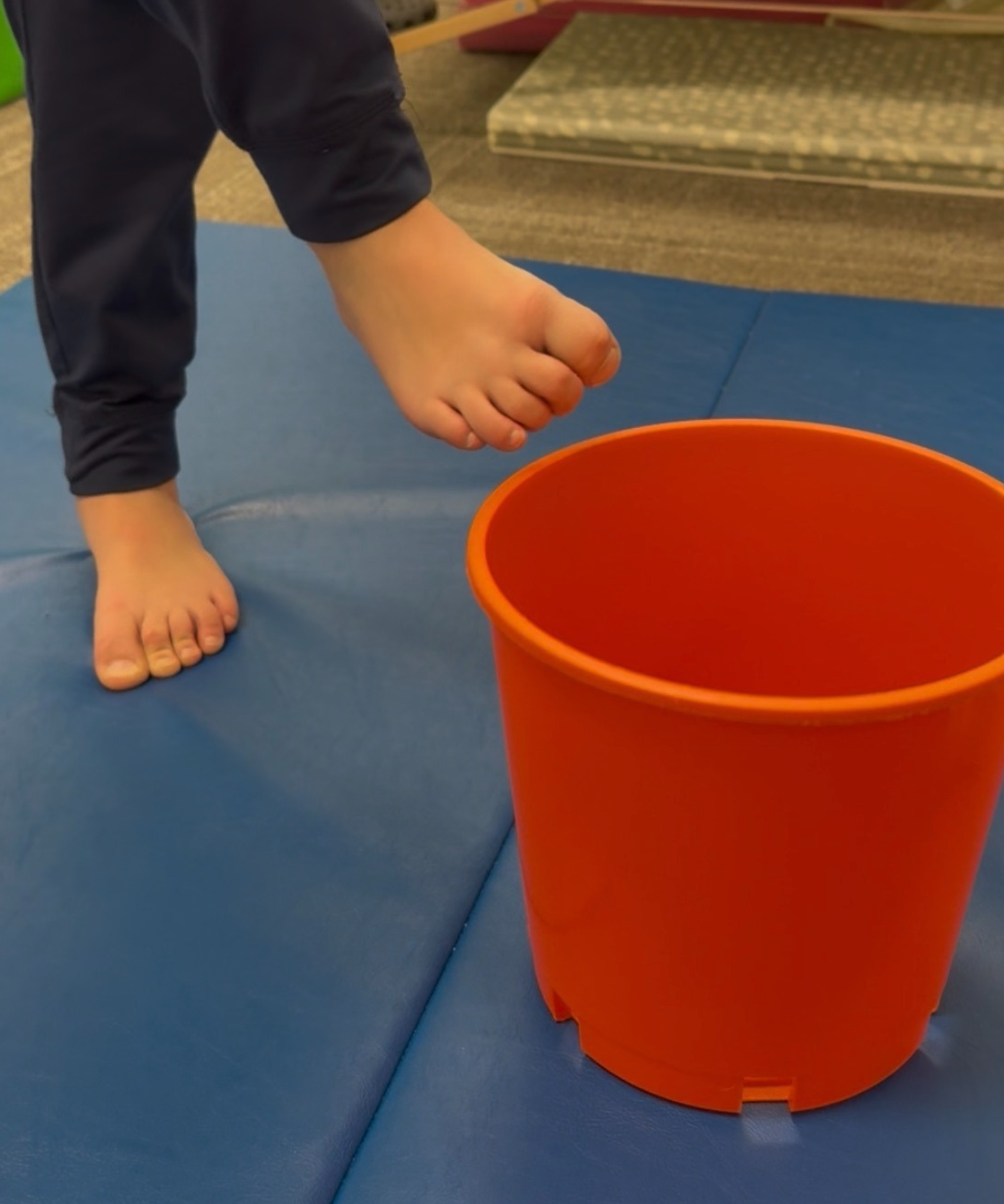
5. Toe Pick-Ups
Use: Marbles, pom-poms, or cotton balls
Have your child pick up small objects with their toes and place them into a container.
Why it works:
This strengthens the small muscles inside the foot, often called the “foot core,” and supports development of the medial arch.
Great for toe walkers:
Stronger intrinsic foot muscles help improve stability and balance over time.
When Should Kids Be Able to Stand on One Leg?
Single-leg balance develops gradually with age. Here are general guidelines:
Age 3: ~3 seconds
Age 4: 5–10 seconds
Age 5+: 10+ seconds with good control
Keep in mind that quality matters just as much as time. Excessive wobbling, trunk leaning, or needing hands for support may suggest decreased stability.
Why Single-Leg Balance Matters
Standing on one leg isn’t just a party trick — it’s essential for many everyday skills, including:
Kicking a ball with control
Navigating stairs with a reciprocal (alternating) pattern
Stepping over obstacles safely
Running and jumping with coordination
Playground confidence and sports readiness
If a child struggles with single-leg stability, you might notice frequent falls, hesitation on stairs, or difficulty keeping up with peers during active play.
A Pediatric PT Tip
The best way to build balance is through play. Short, fun bursts of practice throughout the day are more effective than structured drills.
If you’re ever concerned about your child’s balance, coordination, or walking pattern (like persistent toe walking), a pediatric physical therapist can help determine whether support is needed and provide personalized strategies.
Not sure if your child is hitting their balance milestones?
While these games are a great start, a professional assessment can provide the clarity you need. Whether it’s persistent toe walking or frequent trips and falls, our pediatric PTs are here to help your child move with confidence.