
Modeling Core Language During Bubble Play
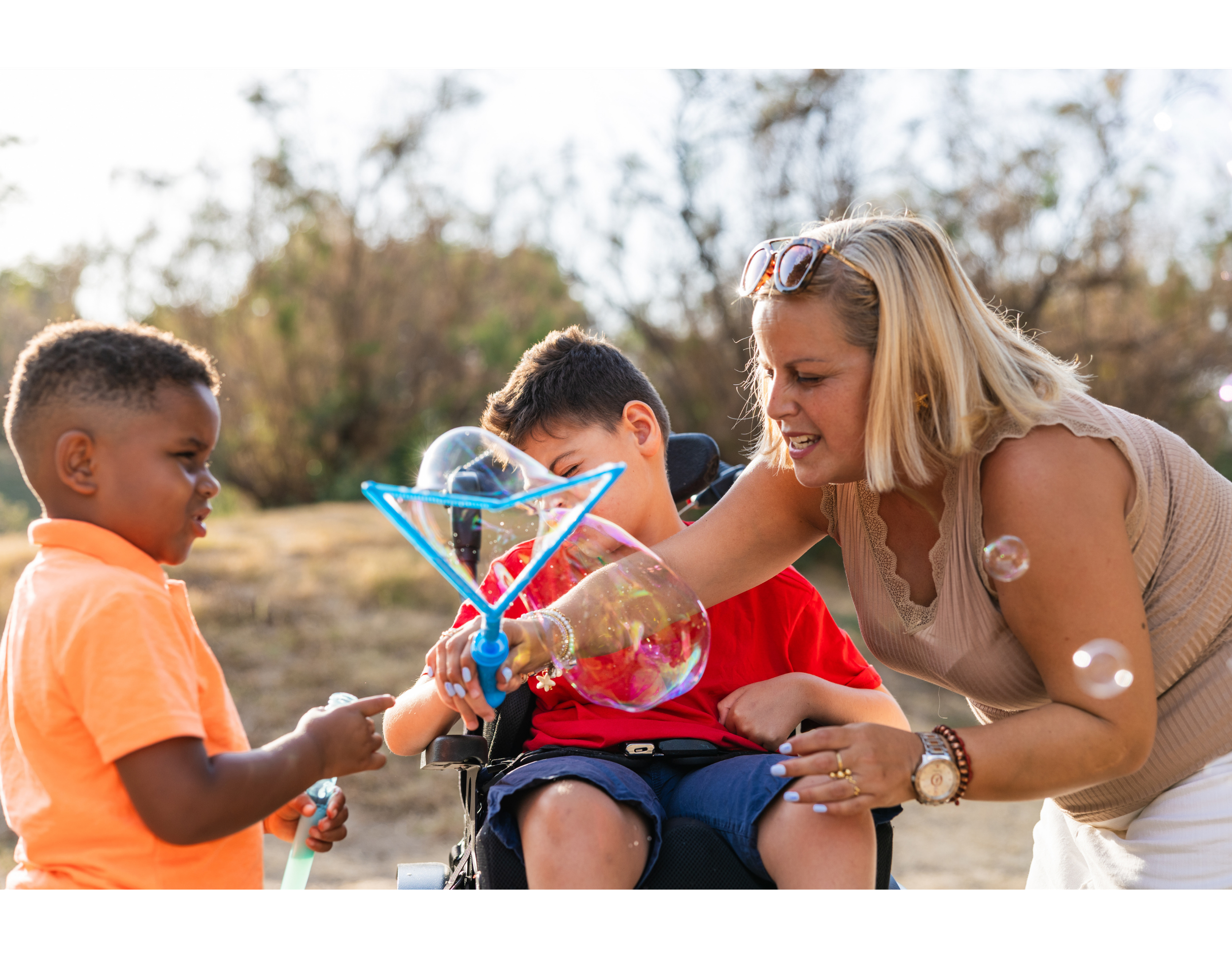
Bubble play is one of the most effective, low-prep, high-engagement contexts for AAC modeling. It is repetitive, motivating, naturally interactive, and full of communication moments. When we are intentional, bubbles become a powerful platform for building core vocabulary, turn-taking, requesting, commenting, and flexible language use.
Below is a practical framework for modeling AAC during bubble play using the core concepts reflected in the visual: open, more, look, up, want, some, help, I like, your turn, where, go.
Why Bubbles Work So Well for AAC
Bubble routines create:
Predictable structure (open → blow → pop → more)
Natural pauses for communication
High repetition of core words
Shared attention
Built-in opportunities for requesting and commenting
Core language thrives in routines like this because children can focus on communication rather than figuring out what’s happening next.
Step 1: Let’s Open
Model:
let’s open
open
help open
Before you even blow bubbles, pause with the container closed. Hold it up. Look expectantly. Model /open/ on the device. If needed, model /help open/.
Resist the urge to over-prompt verbally. Instead of “Say open,” simply model and wait.
You are not testing. You are teaching.
Step 2: More Bubbles
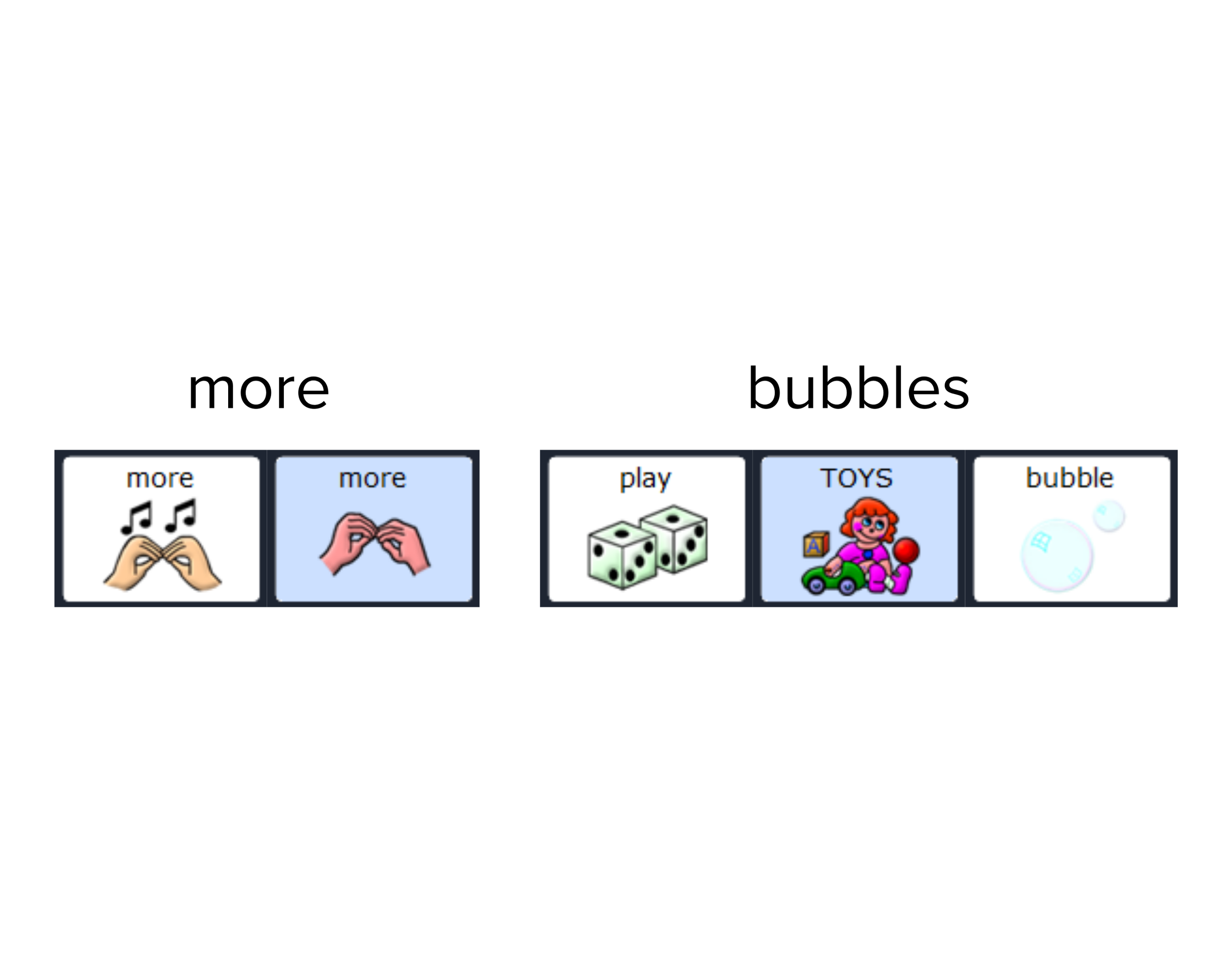
Model:
more
more bubbles
play
toys
bubble
After one small blow, stop. Cap the wand halfway. Look expectantly.
Model more.
If the child is highly motivated, you may see immediate activation. If not, continue modeling consistently. The power is in repetition across turns.
You can also expand:
Child: more
You: more bubbles
This builds phrase length without pressure.
Step 3: Look Up
Bubbles are perfect for joint attention and spatial concepts.
Model:
look
up
look up
Blow bubbles high and exaggerate your gaze shift. Model while pointing to the device. This pairs language with action.
You are teaching verbs and direction words in real time.
Step 4: Want Some
Offer the wand but don’t give it immediately.
Model:
want
want some
I want bubbles
This supports requesting beyond single-word “more.” It introduces sentence structure while staying within core vocabulary.
Remember: model one step above the child’s current level.
Step 5: Your Turn
Turn-taking is naturally embedded in bubble play.
Model:
your turn
my turn
turn
Pause and hold the wand between you. Label the shift explicitly. Turn-taking language generalizes across activities later.
Step 6: Help
Sometimes make it slightly tricky:
Tighten the lid.
Pretend you can’t get it open.
Hand them the wand upside down.
Model:
help
help me
I need help
This builds self-advocacy language in a safe, playful context.
Step 7: I Like Bubbles
Don’t limit modeling to requests.
Model:
I like bubbles
I like
like
Commenting language is critical. If we only model requesting, we risk creating a “vending machine” communicator.
Celebrate the joy:
“I like bubbles!” (model on device)
Step 8: Where Go?
When bubbles pop or drift away, model:
where
where go?
go
what?
This introduces question words and verbs naturally.
Even if the child is not asking yet, exposure builds comprehension and future expressive potential.

How to Model Effectively
Model without demand.
Keep verbal language simple.
Touch the device as you speak.
Repeat key core words often.
Pause and wait.
Accept approximations.
Aim for multiple models per minute in a highly motivating activity.
The Bigger Picture
Bubble play is not about teaching “bubble.” It’s about teaching flexible, high-frequency core words that transfer across contexts:
open (door, snack, box)
more (food, music, tickles)
help (zippers, homework, toys)
go (outside, car, swing)
turn (games, conversation)
When we model consistently in joyful routines, we build functional communication that generalizes.
Bubble play is simple. The language learning inside it is not.
Model generously. Pause intentionally. Celebrate every communicative attempt.
And yes — always save some bubbles for more.
Ready to turn play into progress? Click here to download your free 'AAC Core Language Series: Bubbles' pack and get the exact visual supports you need to start modeling today.