
In-Toeing in Kids: When Is It Normal and When Should You Be Concerned?
If you’ve noticed your child’s feet turning inward when they walk or run, you’re not alone. This is called in-toeing, and it’s one of the most common concerns parents bring up in pediatric physical therapy.
The good news?
- In many cases, in-toeing is completely normal and improves over time.
But sometimes, it can impact coordination, balance, or lead to frequent tripping—and that’s when it’s worth taking a closer look.
Make it stand out
Whatever it is, the way you tell your story online can make all the difference.
What Is In-Toeing?
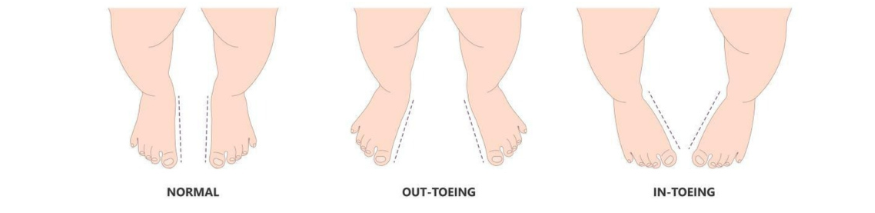
In-toeing simply means your child’s feet point inward instead of straight ahead when walking or running.
You might notice:
Feet turning in
Knees facing inward
A “pigeon-toed” walking pattern
Frequent tripping or clumsiness
What Causes In-Toeing?
In-toeing can come from different parts of the leg. Understanding where it’s coming from helps determine whether it’s typical development or something that may need support.
1. From the Hip (Femoral Anteversion)
This is the most common cause in preschool-aged children.
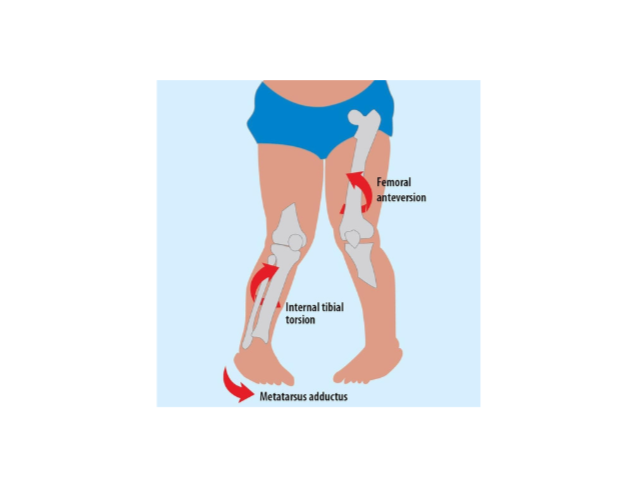
What’s happening:
The thigh bone (femur) is rotated slightly inward at the hip.
What you might notice:
Knees and feet both point inward
Preference for W-sitting
Looks more noticeable when running
Typical age:
Most common ages 3–6 years
Often improves naturally as kids grow
2. From the Shin Bone (Tibial Torsion)
This is more common in toddlers.
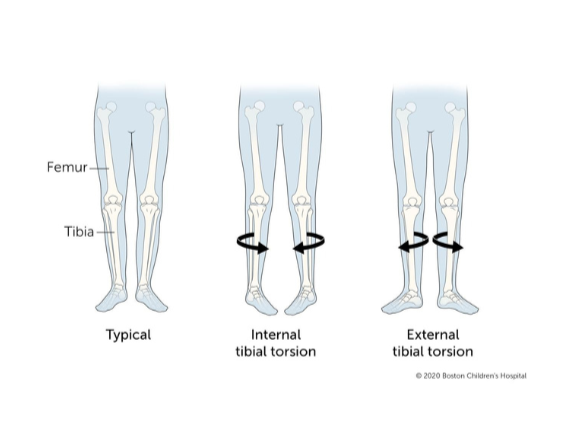
What’s happening:
The shin bone (tibia) is slightly rotated inward.
What you might notice:
Feet turn in, but knees face forward
Often seen when children first start walking
Typical age:
Common in 1–3 years old
Usually improves with growth
3. From the Feet (Metatarsus Adductus)
This is usually seen in infants.
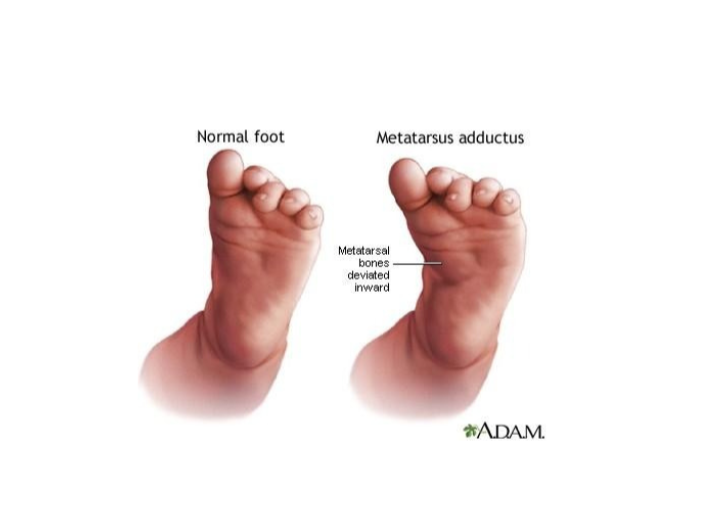
What’s happening:
The front of the foot curves inward.
What you might notice:
A curved “bean-shaped” foot
Often noticed in babies
Typical age:
Seen in infancy
Often resolves on its own, especially if flexible
When Is In-Toeing Normal?
In-toeing is often a normal part of development, especially when:
Your child is under 6–8 years old
It’s not causing pain
They are still meeting motor milestones (running, climbing, jumping)
It’s gradually improving over time
In many cases, the body naturally “unwinds” as children grow.
When Should You Be Concerned?
It may be helpful to have your child evaluated by a pediatric PT if you notice:
Frequent tripping or falling
Difficulty keeping up with peers on the playground
In-toeing that is getting worse, not better
One side significantly more affected than the other
Pain, stiffness, or limping
Persistence beyond age ~7–8
How Can Physical Therapy Help?
Even when in-toeing is developmental, PT can help improve how your child moves and builds confidence.
A pediatric physical therapist may work on:
Strengthening hips and core
Improving balance and coordination
Promoting more efficient walking and running patterns
Reducing tripping and falls
Most importantly, therapy focuses on function—helping your child keep up, play, and move with confidence.
