
At What Age Should a Child Say Their R Sound?
At What Age Should a Child Say Their R Sound?
Many parents notice their child saying “wabbit” instead of “rabbit” or “wed” instead of “red.” The /r/ sound is one of the most complex speech sounds in the English language, so it’s very common for children to struggle with it for several years.
Understanding when the /r/ sound typically develops can help parents know what’s normal—and when it might be helpful to seek support from a speech-language pathologist.
Why the R Sound Is So Difficult
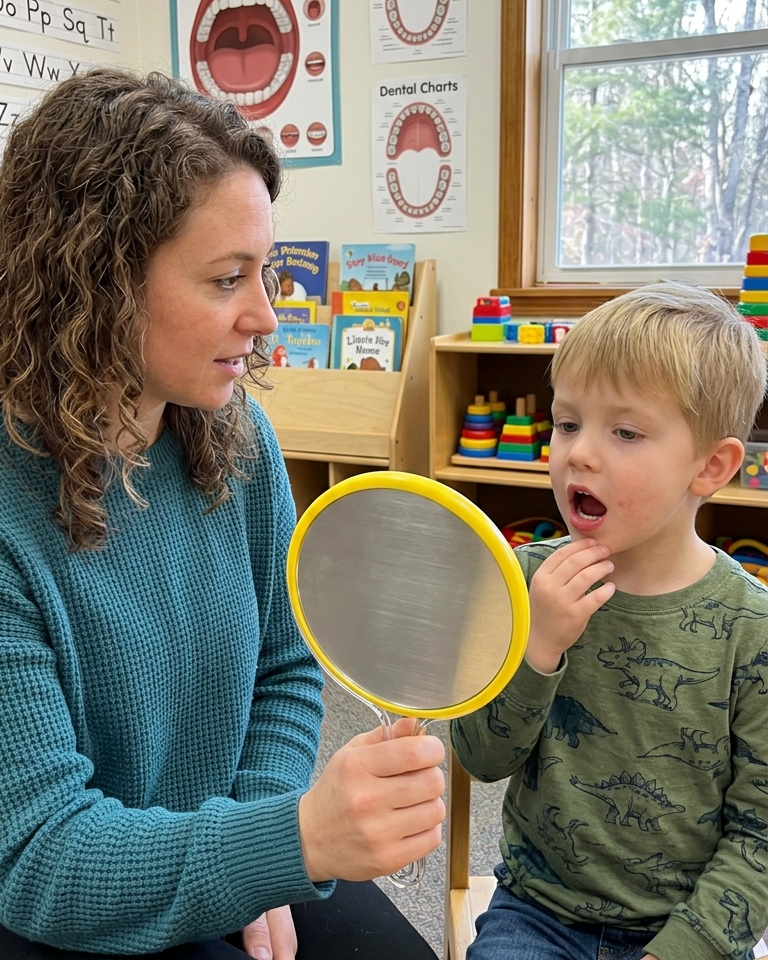
The /r/ sound requires very precise tongue placement and muscle coordination. Unlike sounds such as /p/ or /b/ that use the lips, the /r/ sound is made with the tongue positioned in a very specific way inside the mouth.
To produce /r/, a child must coordinate:
Tongue elevation and tension
Tongue retraction (pulling back)
Jaw stability
Airflow control
Because this sound involves so many movements happening at once, it’s often one of the last sounds children master.

Typical Age for Mastering the R Sound
Speech development follows general patterns, although every child progresses at their own pace.
Most children correctly produce the /r/ sound by around 6 to 7 years old.
Before that age, it is common to hear substitutions such as:
“wabbit” for rabbit
“wed” for red
“fow” for four
These substitutions are considered developmentally appropriate in younger children.
Different Types of R Sounds
Another reason the /r/ sound can take longer to develop is that it appears in many different forms in English. Children may learn some versions earlier than others.
Examples include:
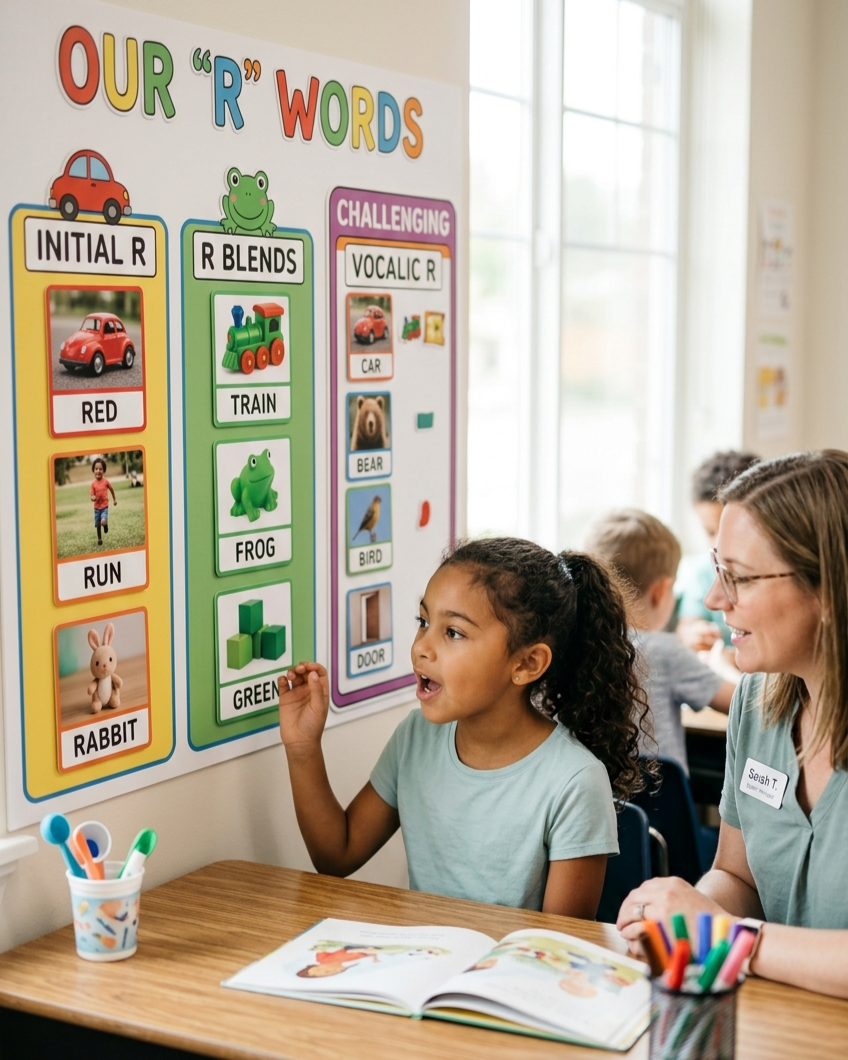
Initial R – red, run, rabbit
R blends – train, frog, green
Vocalic R – car, bear, bird, door
The vocalic /r/ sounds (like er, ar, or, air) are often the most challenging because the /r/ changes the vowel sound.

When Should Parents Be Concerned?
While many children master the /r/ sound by age 7, it may be helpful to consult a speech-language pathologist if:
Your child is 7–8 years old and still consistently substituting /w/ for /r/
Speech errors are impacting intelligibility or confidence
Your child becomes frustrated when trying to say certain words
Teachers or peers frequently ask your child to repeat themselves
Early support can help prevent speech habits from becoming more ingrained over time.

Can the R Sound Be Fixed?
Yes—absolutely. The /r/ sound is one of the most common targets in speech therapy, especially in elementary and middle school.
Speech-language pathologists use specialized strategies to help children learn the correct tongue placement and practice the sound in words, sentences, and conversation.
With the right techniques and consistent practice, many children are able to successfully learn the /r/ sound—even if they struggled with it for years.
Supporting Speech at Home
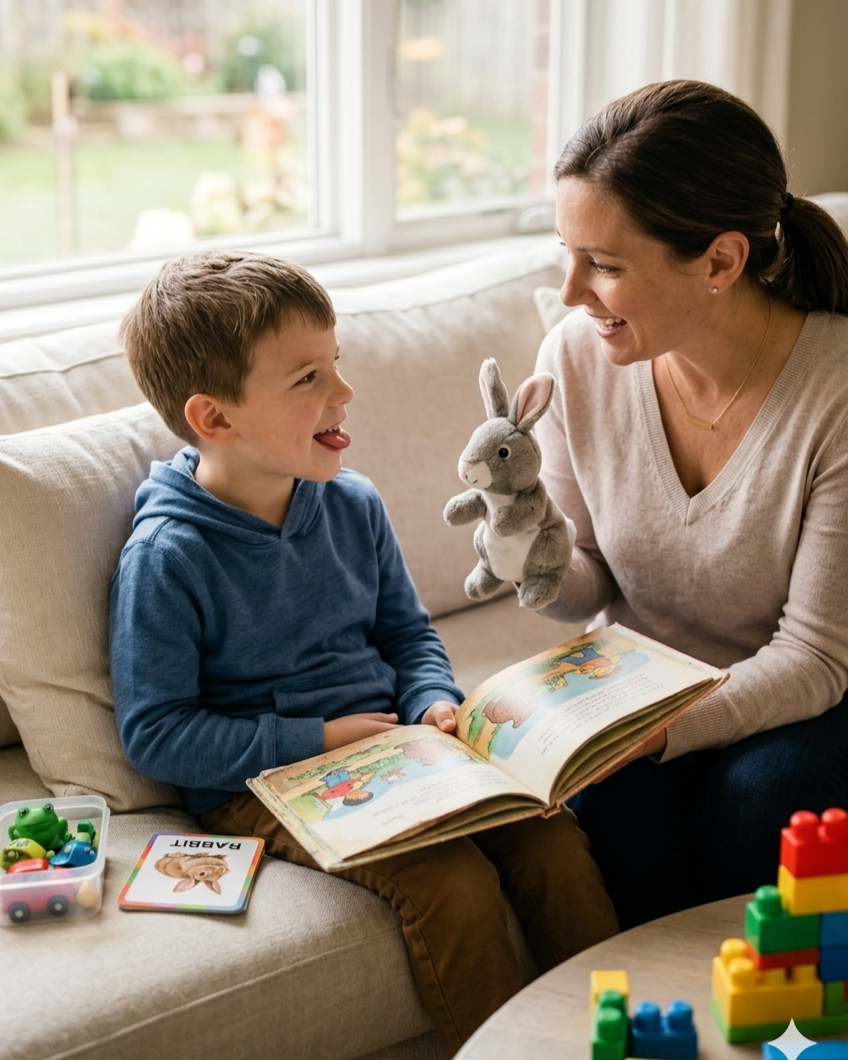
If your child is working on the /r/ sound, simple strategies can help reinforce progress:
Model correct pronunciation during conversation
Encourage practice in short, fun bursts rather than long drills
Praise effort, not just accuracy
Incorporate practice into everyday routines like reading or car rides
Even a few minutes of practice each day can make a meaningful difference.
The Takeaway
The /r/ sound is one of the last speech sounds children develop, and many children don’t master it until around age 6 or 7. Occasional errors in younger children are usually part of typical speech development.
However, if the /r/ sound continues to be difficult for an older child, a speech-language evaluation can help determine whether additional support may be beneficial.
Speech therapy can provide children with the tools they need to develop clear, confident communication—skills that support them both academically and socially.
