
What Happens During a Speech Therapy Evaluation?
What Happens During a Speech Therapy Evaluation?
If your child has been referred for a speech evaluation—or if you’re considering one—you may be wondering what the process actually looks like. Many parents worry their child will feel pressured or tested in a stressful way. In reality, speech-language evaluations for children are designed to feel play-based, supportive, and informative.
A speech evaluation helps a speech-language pathologist understand how your child communicates, what skills are developing well, and where support may be helpful.
Why a Speech Evaluation Is Recommended
Parents may seek a speech evaluation if they notice things like:
Their child isn’t talking as much as expected for their age
Speech is difficult for others to understand
Their child struggles to find words or form sentences
Teachers or caregivers express concerns about communication
Feeding, oral motor, or social communication skills seem challenging
The goal of an evaluation is not to label a child, but to gain a clear understanding of their communication strengths and needs.

Step 1: Parent Conversation and Background Information
The evaluation usually begins with a conversation between the therapist and the parent or caregiver. This helps the therapist understand your child’s history and development.
Topics may include:
Pregnancy and birth history
Early developmental milestones
Medical history
Hearing history
Language exposure (including bilingual environments)
Parent concerns and observations
Parents play a very important role in this step because they know their child best.
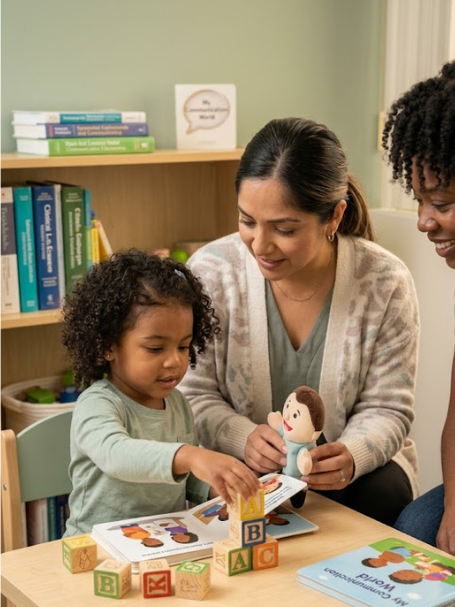
Step 2: Play-Based Interaction
For younger children especially, much of the evaluation happens through play and interaction. The therapist may use toys, books, or games to see how your child communicates in a natural way.
During play, the therapist observes things like:
How your child uses words or gestures
How they respond to questions
Their ability to follow directions
How they interact socially
Speech sound production
This helps the therapist see how communication works in everyday situations.
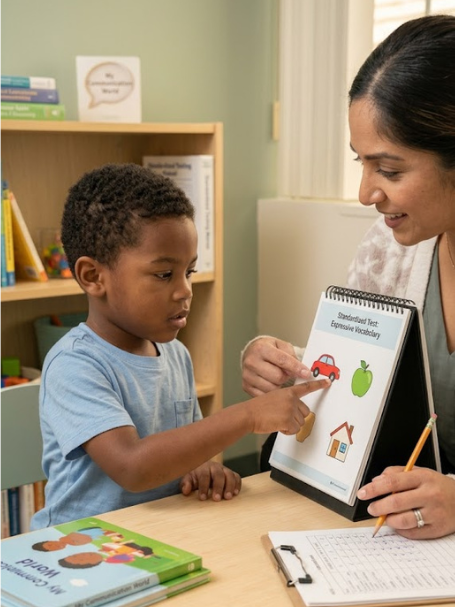
Step 3: Speech and Language Testing
Depending on your child’s age and needs, the therapist may use standardized assessments. These tools help measure speech and language skills compared to typical developmental expectations.
Testing may look at:
Speech sounds (how clearly words are pronounced)
Vocabulary and language development
Understanding language
Sentence structure
Social communication skills
Oral motor skills related to speech and feeding
For older children, this may involve structured tasks or answering questions. For younger children, it may still feel like play.
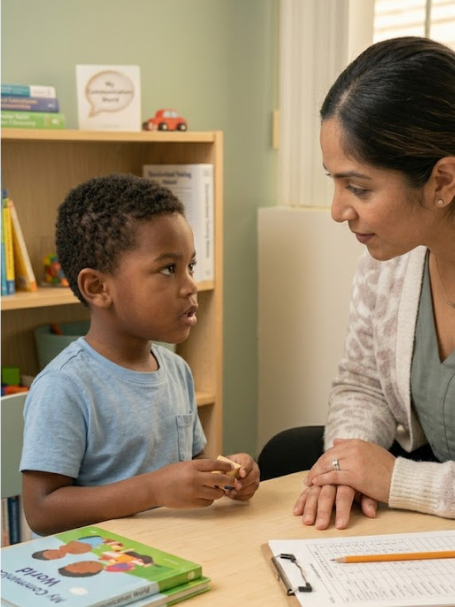
Step 4: Observing Communication Skills
The therapist will also observe how your child communicates beyond individual sounds or words.
This can include:
Eye contact and engagement
Turn-taking in conversation
Ability to express needs and ideas
Frustration related to communication
Attention and listening skills
All of these pieces help build a complete picture of your child’s communication abilities.

Step 5: Reviewing Results and Next Steps
After the evaluation, the speech-language pathologist reviews the findings and explains them in a way that is clear and helpful for families.
You may learn:
Whether your child’s speech and language skills are within the typical developmental range
If speech therapy may be beneficial
What types of goals or skills therapy might target
Suggestions for supporting communication at home
Parents are encouraged to ask questions and share their thoughts during this discussion.
A Supportive First Step
A speech language therapy evaluation is designed to be a positive and informative experience for both children and parents. It provides valuable insight into how a child communicates and helps determine whether additional support could help them succeed socially, academically, and emotionally.
If you have concerns about your child’s speech or language development, an evaluation can be an important first step toward helping them build clear, confident communication skills. If you have questions whether you’re local or not, give us a call and ask to talk to someone about what’s involved in an evaluation … or feel free to email us
