
5 Ways to Decrease W-Sitting (Pediatric PT Approved!)
5 Ways to Decrease W-Sitting (Pediatric PT Approved!)
If you’ve ever noticed your child sitting like a “W” on the floor, you’re not alone—it’s a very common position for kids! While W-sitting can feel stable and comfortable, frequent use may limit core strength, hip strength, and overall movement development over time.
The good news? You don’t need to constantly correct your child or say “fix your legs” all day. Instead, we can build strength and awareness through play so they naturally choose better sitting positions.
Here are 5 simple, play-based activities you can start today:
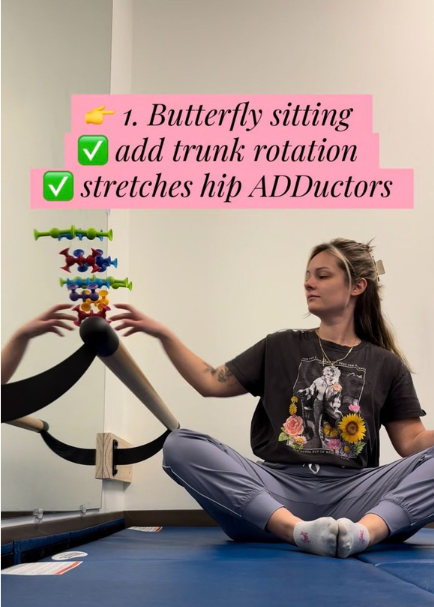
1. Butterfly Sitting with Trunk Rotation
This is a great alternative sitting position that gently stretches the hips.
Have your child sit with the bottoms of their feet together (like butterfly wings). From here, encourage them to reach across their body to grab toys or place puzzle pieces.
Why it helps:
Stretches the inner hips (often tight in W-sitters)
Encourages trunk rotation and core activation
Promotes a more functional sitting posture
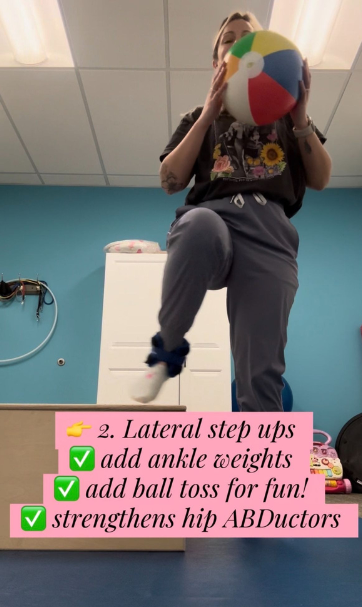
2. Lateral Step-Ups
Use a small step, curb, or sturdy surface and have your child step sideways up and down.
To make it more fun, add:
A ball toss
Light ankle weights (if appropriate)
Why it helps:
Strengthens hip abductors (key muscles often weak in W-sitters)
Improves balance and coordination
Builds stability needed for better sitting and standing posture
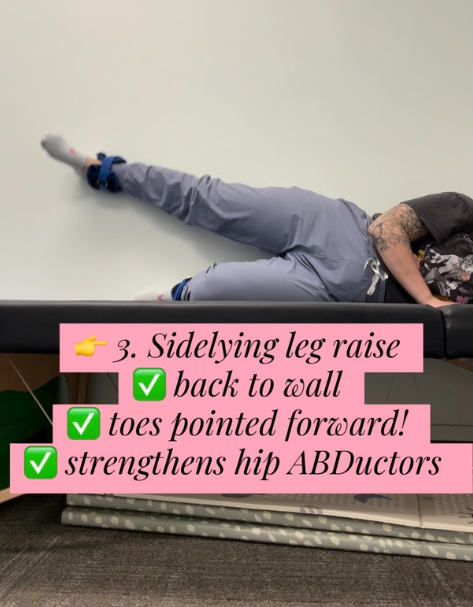
3. Side-Lying Leg Raises
Have your child lie on their side with their back against a wall and toes pointed forward (not turned up!).
Lift the top leg up and down slowly.
Why it helps:
Targets hip abductors with proper alignment
Prevents compensations by using the wall as feedback
Builds strength that supports upright sitting
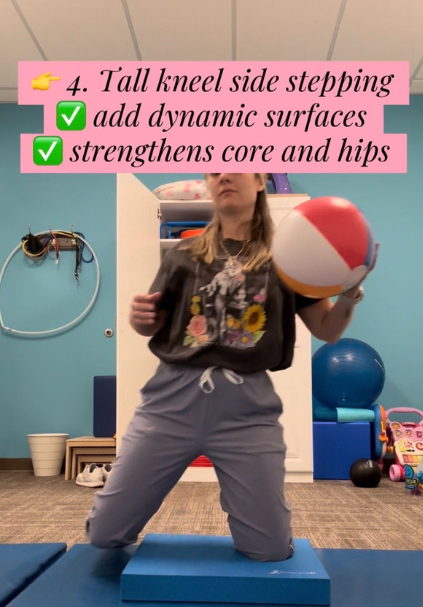
4. Tall Kneeling Side-Stepping
Start in a tall kneeling position (on both knees), then have your child step sideways on their knees.
Level it up by:
Adding a pillow or foam pad
Tossing a ball while moving
Why it helps:
Strengthens core and hips simultaneously
Challenges balance in a new position
Encourages postural control outside of W-sitting
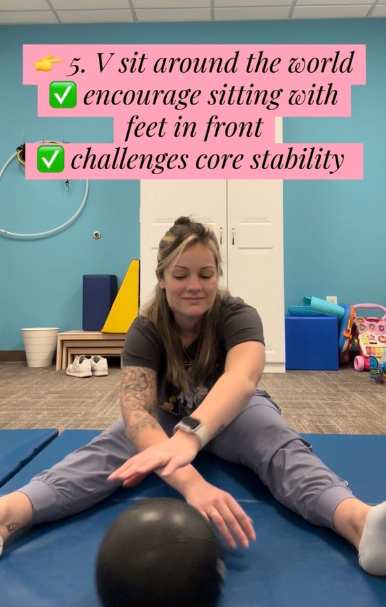
5. V-Sit “Around the World”
Have your child sit with their legs straight out in front (V-sit). Have them roll a ball around their legs in a full circle.
Why it helps:
Promotes sitting with legs in front (instead of W)
Builds core stability
Encourages weight shifting and control
Final Thoughts
W-sitting isn’t something to panic about—but if it’s your child’s go-to position, it’s worth addressing through strengthening and movement variety.
Focus less on constant correction and more on:
Offering different sitting options
Building hip and core strength
Making movement fun and engaging
If you’re noticing persistent W-sitting, clumsiness, or delays in gross motor skills, a pediatric physical therapist can help guide you with a personalized plan.
💬 Save this for later and try 1–2 activities each day!
🎥 Check out the video version of these exercises on our page for demos.
