
My Toddler Isn’t Talking. What Do I Do and Who Should I See?
If your toddler is not talking as much as expected, it’s natural to wonder what steps to take next. Many parents ask: “Should I wait, or should I have my child evaluated?”
The good news is that there are professionals who specialize in helping children develop communication skills.
The First Step: A Speech-Language Evaluation
The most common professional to evaluate speech and language development is a speech-language pathologist (SLP).
Speech-language pathologists are trained to assess how children:
Understand language
Use words and gestures to communicate
Produce speech sounds
Interact socially
An evaluation helps determine whether a child’s communication skills are developing typically or whether additional support may be helpful.
What Happens During the Evaluation?
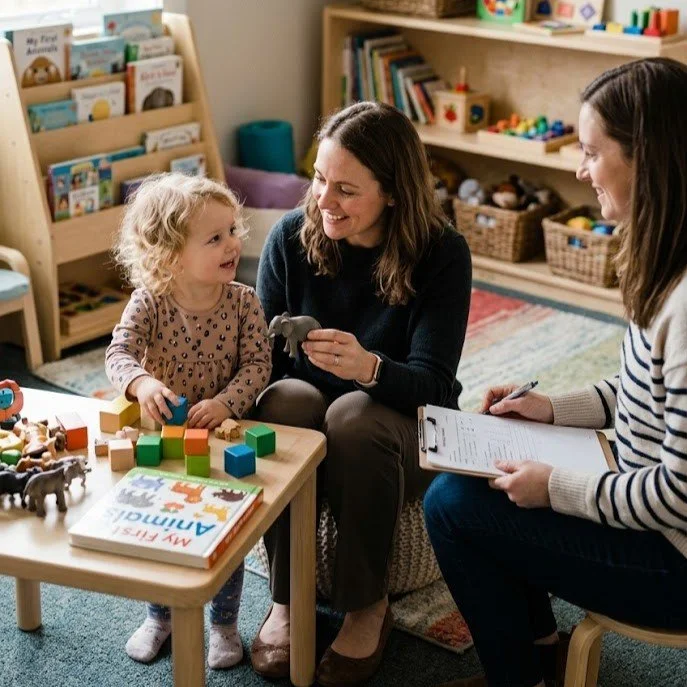
For toddlers, speech evaluations are usually play-based and interactive.
The therapist may:
Play with toys or read books with your child
Observe how your child communicates
Listen for sounds and words
Ask questions about development and daily routines
Parents are an important part of the process because they provide insight into how their child communicates at home.
Other Professionals Who May Be Involved
In some situations, additional professionals may help support communication development.
These may include:
Pediatricians, who monitor overall development
Audiologists, who evaluate hearing
Early intervention specialists, who provide developmental services for young children
Working together, these professionals help determine the best way to support a child’s communication growth.
Why Early Evaluation Can Be Helpful
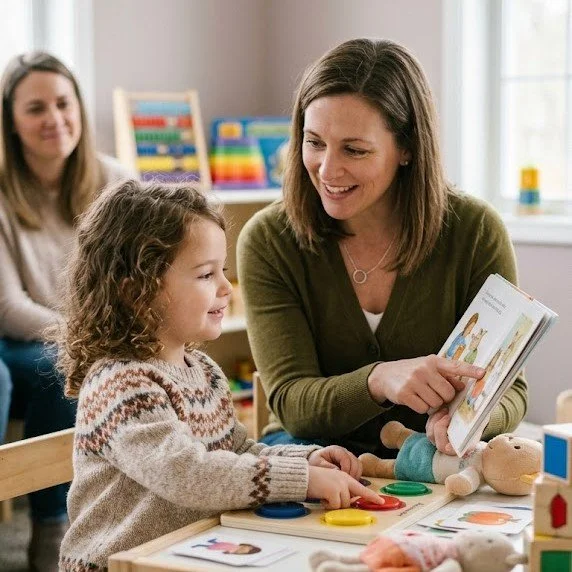
Some parents worry that seeking an evaluation too early may be unnecessary. However, early evaluations can be helpful even when speech delays are mild.
Evaluations can:
Provide reassurance if development is typical
Identify areas where a child may need support
Give parents strategies to encourage language at home
Early support often makes it easier for children to develop strong communication skills.
Coming Next in This Series
Once parents learn their toddler may benefit from extra language support, the next question is often:
“What can I do at home to help my child talk?”
The final blog in this series will share simple strategies parents can use during everyday routines to support language development.
