
5 Tips to Help Your Child Learn How to Jump
Jumping is an exciting gross motor milestone—but it’s also a complex skill that requires strength, coordination, balance, timing, and confidence. If your child isn’t jumping yet or seems unsure, that’s very common.
Jumping is a learned skill, and with the right building blocks, many kids can make great progress through play.
Here are 5 pediatric physical therapy tips to help your child learn how to jump.
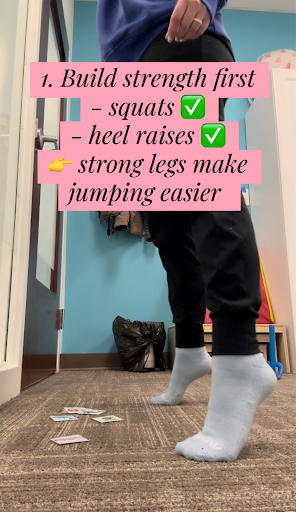
Build Strength First (Squats + Heel Raises)
Before a child can jump, they need the strength to bend down, push through their legs, and lift their body off the ground.
Why squats matter:
Squats strengthen the hips, thighs, and core while teaching children how to lower their body in a controlled way. This is the exact movement pattern needed before a jump—bending the knees and hips to load the legs before pushing up.
Why heel raises matter:
Heel raises strengthen the calves and feet and teach children how to push up through the balls of the feet. Jumping requires a strong push through the toes, and heel raises help children feel and practice that motion.
Try this at home:
Have your child squat down to pick up a puzzle piece or toy, then place the puzzle board or target up high so they have to stand tall and go up on their tippy toes to reach and place the piece. This combines squatting and heel raises in a functional, playful way that directly supports jumping.
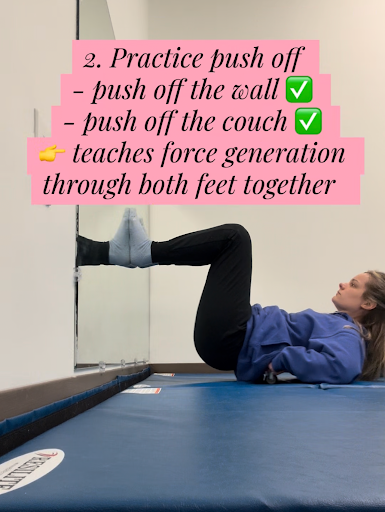
2. Practice Push-Off with Both Feet Together (Reducing Gravity and Friction)
A key part of jumping is learning how to bend the legs and push away using both feet at the same time.
Practicing push-off in modified positions helps break the skill down.
Why this helps:
Lying on the back decreases the effects of gravity, making it easier to generate a push
Using a ball or scooter underneath the body reduces friction, allowing the child to move more easily
Together, these setups help children focus on the movement pattern needed for jumping.
Try this at home:
Have your child lie on their back with their feet against a wall or couch
Ask them to bend their knees, then push away with both feet together
If the carpet or rug is making it difficult to “blast off” - add a therapy ball or scooter under their body so they can push themselves away from the wall
This is similar to pushing off the wall in a swimming pool—bend, push, and glide away.
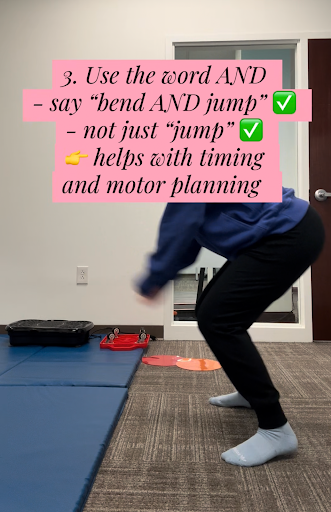
3. Use the Word “AND” While Your Child Is in the Squat
Timing is a big part of jumping. Many children rush the movement or try to jump before their body is ready.
Using the word “and” helps organize the sequence.
How to cue it:
Have your child squat down first. While they are holding the squat and preparing to push, say:
“Bend… AND jump!”
That pause allows the legs to load before pushing off with both feet, making the jump more controlled and successful.
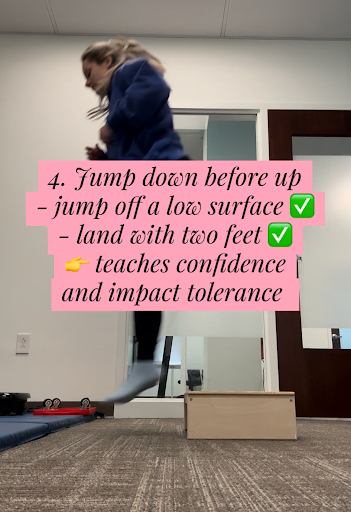
4. Start with Jumping Down First
Jumping down is often easier than jumping up and helps children gain confidence with their bodies.
Why this helps:
Jumping down teaches two-foot takeoff and landing, improves balance, and helps children feel comfortable with gravity. Many children learn to jump down from a step before they can jump up or forward.
Try this at home:
Start with a small height like a step or curb and encourage your child to jump down and land with both feet together.
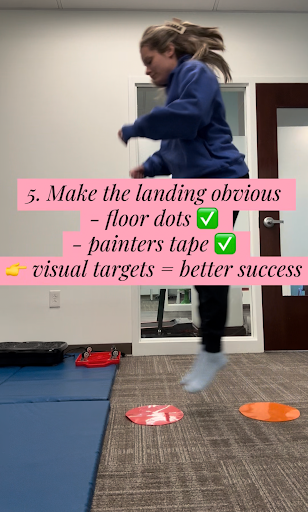
5. Use Markers to Show Where to Jump
Visual cues help children understand where their body is going in space.
Try this at home:
Use tape, floor dots, paper plates, or toys as markers to show where your child should jump from and to. This helps with motor planning, accuracy, and confidence.
Some floor markers even have squeakers inside - adding that auditory cue as well!
A Quick Note on Jumping Milestones
Jumping isn’t just one skill—children usually learn to jump in different ways over time. Jumping down often comes before jumping up, and jumping over objects typically comes later as strength and coordination improve.
Most children typically learn to:
Jump up with two feet off the ground around 2 years old
Jump over a small obstacle (like a line or pool noodle) around 3–4 years old
Jumping down often comes before jumping up because gravity helps, while jumping over objects requires more strength, coordination, and motor planning.
These ages are general guidelines, not strict deadlines. Many children need extra practice or confidence before these skills come together.
When Should Parents Seek Extra Support?
If your child avoids jumping, struggles to get both feet off the ground, or seems frustrated with movement, a pediatric physical therapist can help identify which building blocks may need extra support.
👉 Contact us today to learn more or schedule an evaluation.