
5 Core Exercises for Kids (That Aren’t Sit-Ups)
When people think about core strength, they often picture sit-ups or crunches. For kids, though, core strength is built best through movement, balance, and play. A strong core helps children with posture, balance, coordination, and gross motor skills like running, jumping, and climbing.
The good news? Kids don’t need sit-ups to build core strength. These functional, play-based activities strengthen the core in a way that supports real-life movement.
Here are 5 pediatric physical therapy–approved core exercises for kids—no sit-ups required.

1. Ball Sitting + Reaching
Sitting on a therapy ball challenges balance and trunk control because the surface moves underneath the child. When a child reaches in different directions, their core muscles must activate to keep them upright.
Why this works:
This activity strengthens deep core muscles, improves balance, and builds trunk control needed for sitting, standing, and dynamic movements.
Try this at home:
If you don’t have a therapy ball, your child can sit on a firm pillow, couch cushion, or even a slightly unstable surface like a bean bag chair. Have them reach down to pick up toys or puzzle pieces and place them up high, to the side, or behind them to increase the challenge.
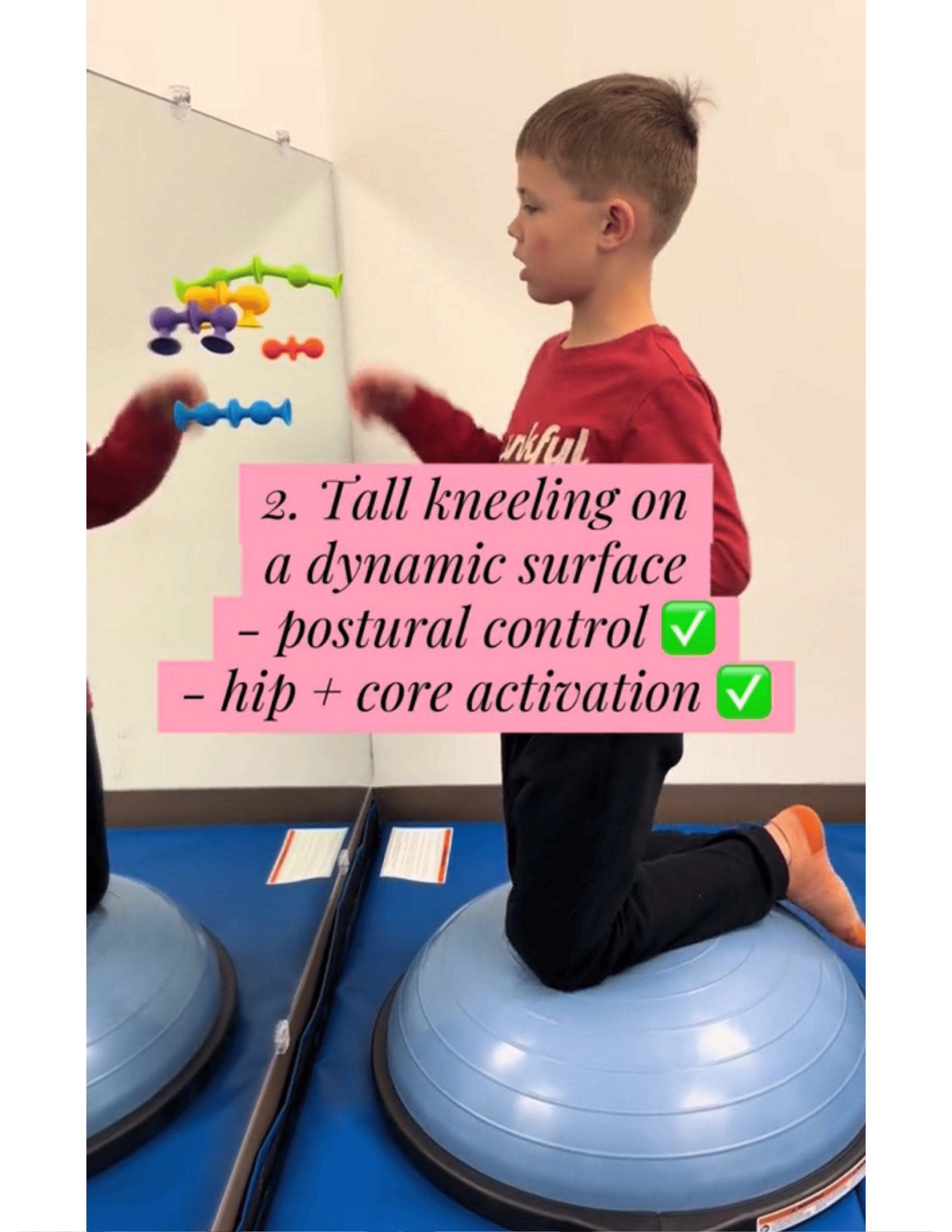
2. Tall Kneeling on a Dynamic Surface
Tall kneeling removes the ankles and feet from the equation, forcing the hips and core to work harder to maintain an upright posture. Adding an unstable surface increases the challenge.
Why this works:
This position promotes postural control, hip activation, and core stability without relying on momentum or leg strength.
Try this at home:
Have your child tall kneel on a BOSU, balance cushion, couch cushion, or folded pillow. Add reaching games, toy placement at a wall, or throwing and catching a ball to make it more engaging.
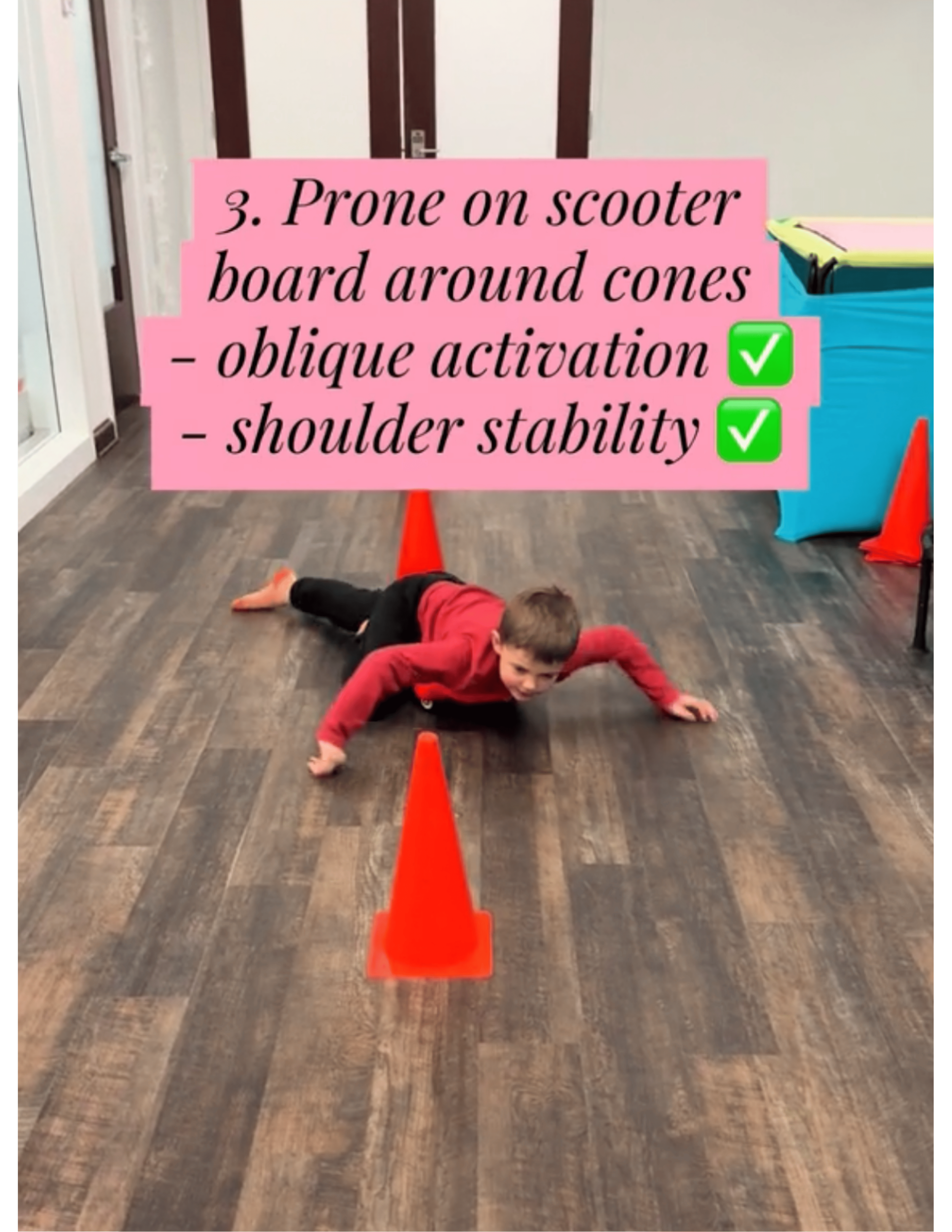
3. Prone on Scooter Board (or Crawling Alternatives)
Lying on the stomach while moving requires the core to stabilize the trunk while the arms do the work. This is a great way to activate the obliques and shoulder stabilizers.
Why this works:
It builds core strength, shoulder stability, and endurance in a way that feels like play rather than exercise.
Try this at home:
If you don’t have a scooter board, substitute with bear crawls or crab walks. You can also have your child crawl through an obstacle course, around furniture, or under tables to mimic the same core engagement.
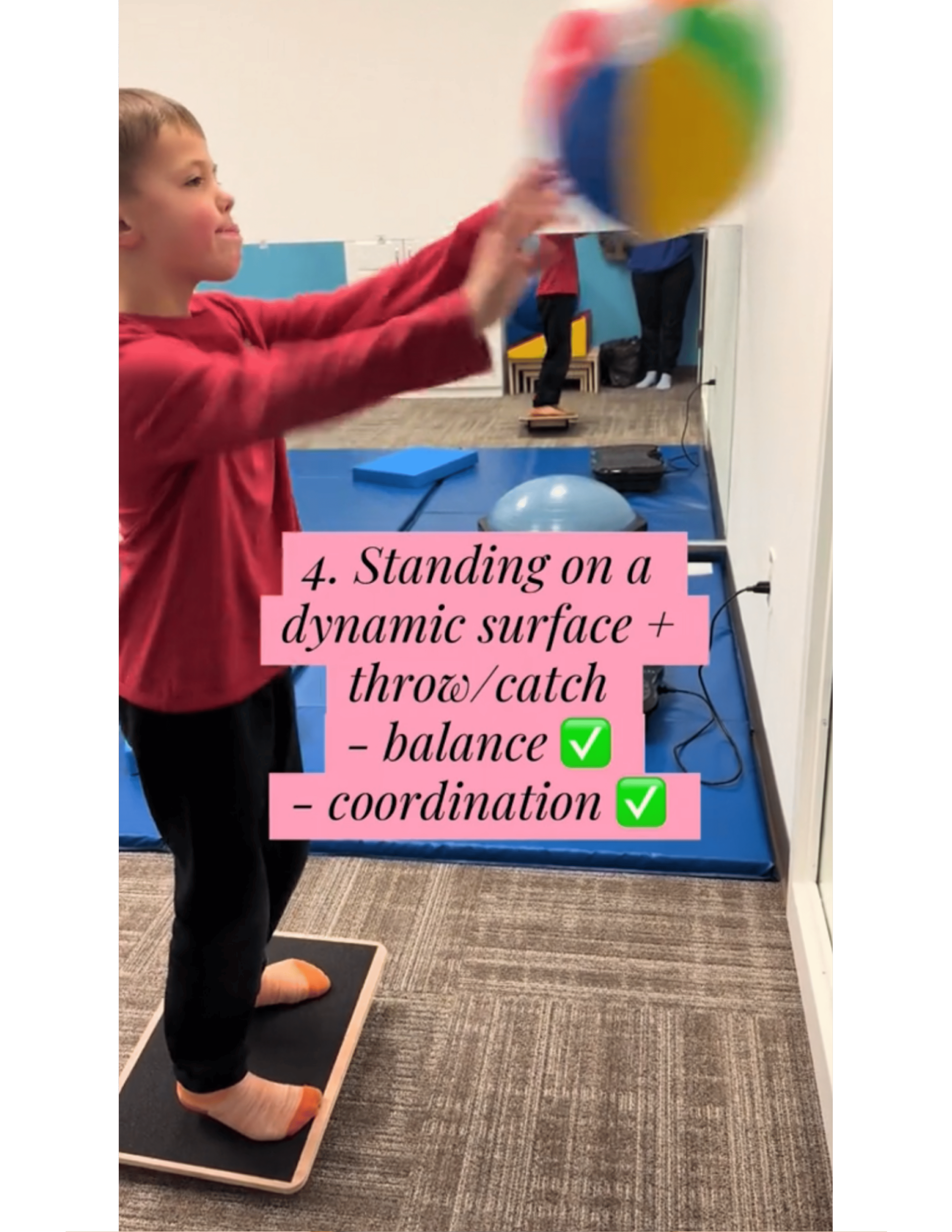
4. Standing on a Dynamic Surface + Throw/Catch
Standing on an unstable surface while throwing and catching a ball challenges the core to stay engaged as the body reacts to movement and balance changes.
Why this works:
This activity improves balance, coordination, and core strength through dynamic movement—similar to what kids need during sports and playground play.
Try this at home:
Have your child stand on a pillow, couch cushion, trampoline, balance beam, or even a line of tape on the floor while playing catch. Change the size or direction of throws to increase the challenge.
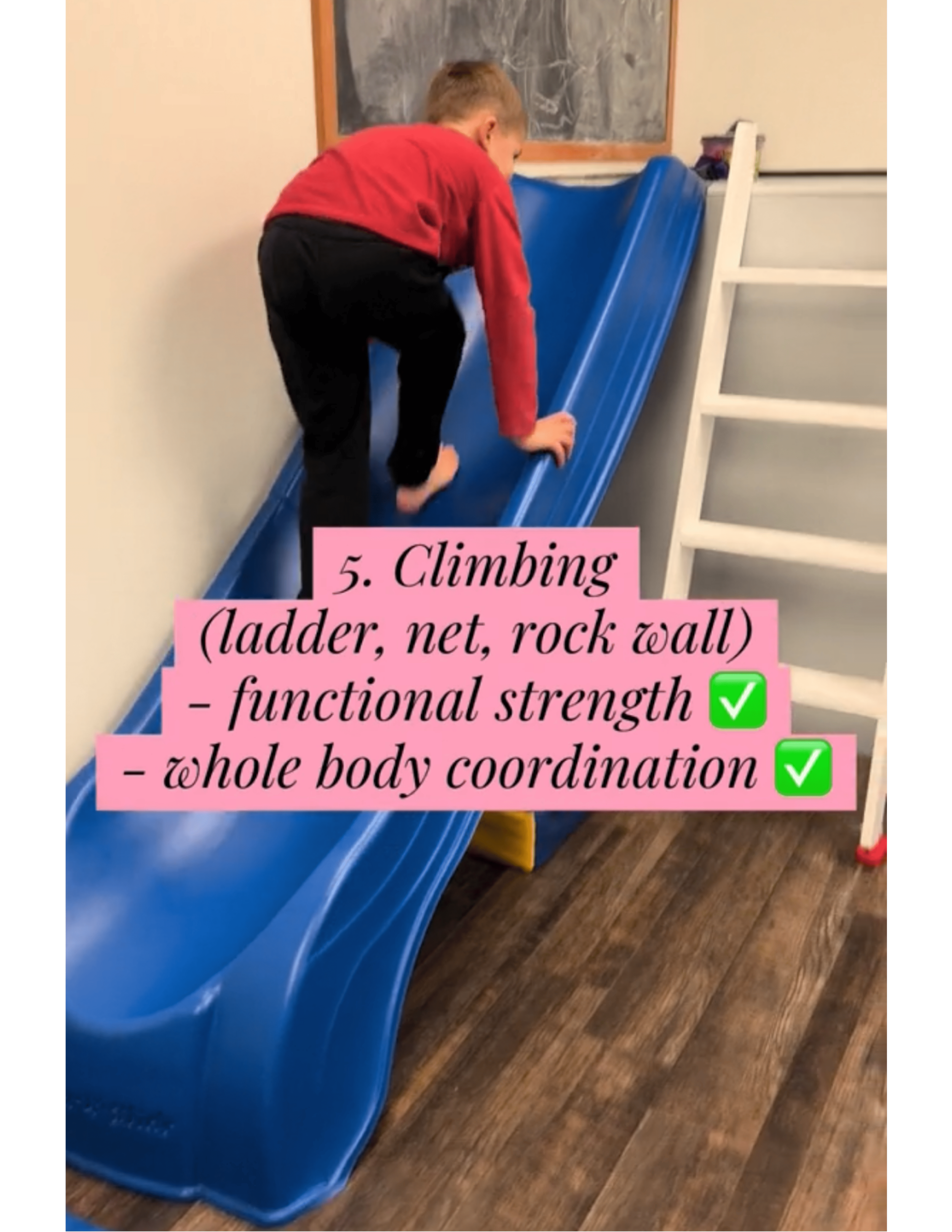
5. Climbing (Ladder, Net, Rock Wall—or Home Obstacle Courses)
Climbing is one of the most functional core exercises for kids. It requires the core to stabilize the body while the arms and legs move together.
Why this works:
Climbing builds functional strength, whole-body coordination, and core stability that carries over to daily activities and play.
Try this at home:
Create a simple obstacle course using pillows, couch cushions, tunnels, or chairs. Have your child crawl over pillows, climb onto the couch, or move through a tunnel. Even playground climbing structures count as excellent core work.
If you have any questions or need some help, email us!